



By the time most people see a viral post, it can feel as if its success was obvious from the start. The joke seems perfectly timed. The video feels instantly shareable. The argument appears to have found exactly the right audience. Within hours, a clip, phrase, image or idea can move far beyond its original circle and start showing up in group chats, feeds, news stories and everyday conversations.
But virality is rarely just about making something good. It usually comes from a mix of psychology, technology, timing and luck.
At its simplest, something goes viral when people do more than look at it. They pass it along. They quote it, remix it, argue with it, imitate it or send it to someone with the unspoken message: you need to see this. That act of sharing is the engine of virality. Platforms can speed it up, but people still provide the spark.
The most shareable material usually creates a strong emotional reaction. It might make people laugh, gasp, feel angry, feel seen, feel inspired or feel surprised. Mild approval is usually not enough. A post that makes someone think “that’s nice” may get a like. A post that makes someone laugh out loud or immediately want another person’s reaction is much more likely to be forwarded.
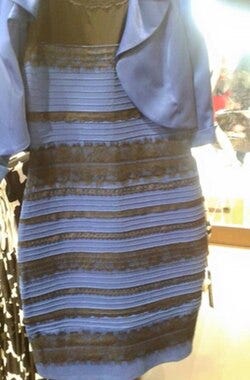
One famous example is “the dress,” a 2015 photograph of a striped dress that spread across the internet because people could not agree on its colors. Some saw it as blue and black. Others saw it as white and gold. The photo itself was ordinary, but the disagreement was immediate and personal. People showed it to friends, family members and co-workers because they wanted to know what someone else saw. Its power came from how easy it was to join in. Everyone could look, decide and pull someone else into the debate.
Emotion alone, though, does not explain why some things spread and others disappear. Sharing is also a way people present themselves. People send content because it helps them say something about who they are or how they see the world. A person might share something because it makes them look funny, informed, compassionate, skeptical, stylish, outraged or ahead of the curve. Viral content often gives people a small but immediate social reward. To share it is to take part.
That is why relatability is so powerful. A joke about workplace exhaustion, a video about dating fatigue, a meme about family group chats or a clip about the misery of modern travel can feel less like content than recognition. “This is me,” “this is us” or “someone finally said it” are some of the strongest reasons people share. Virality often begins when a person sees not just an idea, but a reflection of their own life.
The idea also has to travel easily. The most contagious posts tend to be simple to understand and quick to explain. A complicated argument can go viral, but it usually needs a clear hook: a memorable phrase, a striking image, a sharp contrast or a feeling people understand right away. Online, friction kills momentum. If a viewer has to work too hard to understand why something matters, the chain of sharing usually breaks.
Novelty matters too. The internet rewards things that interrupt the pattern: the unexpected joke, the surprising fact, the strange image, the useful tip, the beautiful moment, the outrageous claim. People like the feeling of discovery. When they share something new, the message is not only “look at this.” It is also “I found this.”
Then there is the machinery of distribution. In an earlier media world, editors, producers and publishers decided what reached a mass audience. Now attention is shaped by a mix of human behavior and algorithmic recommendation. A video that people watch to the end, replay, comment on, save or share may be shown to more people. If that next group responds in the same way, the platform may push it even further.
This feedback loop can make popularity look sudden. In reality, many platforms are constantly testing content with different groups of people. When early engagement is unusually strong, the audience can grow very quickly. What looks like a spontaneous explosion may actually be the result of many small signals building on one another.
But even a strong post needs the right environment. Timing can turn ordinary content into a phenomenon. A joke lands differently during a major news event. A song lyric can take on new meaning after a celebrity breakup. A practical tip spreads faster during a crisis. A meme format catches fire because it gives people a way to talk about the mood of the week.
Context does not just surround viral content. It helps create it. The same post that fails on Monday may take off on Friday because the public conversation has changed. Virality depends not only on what is said, but on what people are already ready to hear.
This is one reason formulas for virality are unreliable. Marketers, creators and political strategists often try to copy the surface features of viral posts: the caption style, the editing rhythm, the outrage, the joke structure, the thumbnail. Sometimes it works. Often it does not. The visible traits of a viral post are only part of the story. The hidden variables, like who saw it first, what else was happening, how a platform ranked it and what mood the audience was in, are much harder to reproduce.
Luck also plays a bigger role than people like to admit. A post may reach one highly connected account. A niche community may adopt it. A critic may attack it and accidentally spread it further. A platform may test it with an unusually receptive audience. A phrase may become useful to people in ways the original creator never expected.
Some viral campaigns work because they give people a role to play. The Ice Bucket Challenge, a 2014 social media campaign for ALS, also known as amyotrophic lateral sclerosis or Lou Gehrig’s disease, asked people to dump a bucket of ice water over themselves, post the video online and challenge others to do the same or donate. It was not just a message people could watch. It was an action they could perform. It turned support for a cause into something public, repeatable and easy to pass along. Each participant became both audience and broadcaster.
The most durable viral objects often work this way. They invite people to imitate, argue, adapt or add their own version. A dance challenge, meme template, catchphrase or controversial claim spreads not only because people consume it, but because they can do something with it. The audience becomes part of the distribution system.
That participatory quality helps explain why virality can be exciting and dangerous at the same time. A viral post can launch a career, raise money, expose wrongdoing or bring attention to an overlooked issue. It can also distort facts, reward outrage, flatten nuance and subject ordinary people to overwhelming scrutiny. Scale changes meaning. A joke meant for friends can become a public statement. A half-formed thought can become evidence in a trial of public opinion.
Misinformation often travels through the same channels as harmless entertainment. A false claim that provokes fear, anger or moral urgency can spread because it feels important to share before it has been checked. In those cases, the same qualities that make content contagious, including emotion, simplicity, identity and speed, can also make it misleading.
In the end, virality is not one magic quality inside a piece of content. It is a relationship between the content, the audience, the platform and the moment. The content has to give people a reason to care. The audience has to have a reason to share. The platform has to have a reason to amplify it. The moment has to be ready for it.
That is why going viral is easier to explain afterward than to engineer in advance. The internet can measure attention with incredible precision, but it cannot fully predict human impulse. People share because they feel something, because they want to belong, because they want to be seen, or because they want to warn, delight, persuade or provoke someone else.
A viral post is not simply something many people saw. It is something many people decided, for their own reasons, to carry forward.
Evidence & Source Transparency
Evidence First shows its work. The article ends above; this section is included so readers can inspect the main sources behind the factual claims.
The list below does not source every sentence. It focuses on the factual claims most important to the argument.
1. Emotion and virality
Claim or topic:
The article says viral content often produces strong emotional reactions, and that high-arousal emotions such as awe, anger, anxiety, surprise or amusement can make people more likely to share.
Source:
Jonah Berger and Katherine L. Milkman, “What Makes Online Content Viral?”
Source type:
Academic research.
What it supports:
The study found that online content was more likely to be widely shared when it evoked high-arousal emotions, including awe, anger and anxiety. It also found that practical usefulness, interest and surprise were associated with sharing.
Important caveat:
The study analyzed New York Times content and controlled experiments, so it supports the general relationship between emotional arousal and sharing, not a universal formula for every platform, format or audience.
2. Social reasons people share
Claim or topic:
The article says people share content partly because it helps them express identity, maintain relationships, support causes or show others what they care about.
Source:
ANA summary of The New York Times Customer Insight Group’s “The Psychology of Sharing”
Source type:
Analysis / survey summary.
What it supports:
The source summarizes research by The New York Times Customer Insight and Advertising Groups, including ethnographic work and a survey of 2,500 medium-to-heavy online sharers. It describes motivations such as defining oneself to others, nourishing relationships and supporting causes or brands.
Important caveat:
This was marketing-oriented research, not a peer-reviewed academic study. It is useful for context about stated sharing motivations, but it should not be treated as definitive evidence about all users or all platforms.
3. “The dress” viral example
Claim or topic:
The article describes “the dress” as a 2015 viral photo that spread because viewers disagreed over whether the dress appeared blue and black or white and gold.
Source:
Time, “How #TheDress Went Viral”
Source type:
Reputable journalism.
What it supports:
The source documents the 2015 viral phenomenon, the disagreement over the dress’s perceived colors and the rapid spread of the debate online.
Important caveat:
This source supports the basic history and spread of the example. The article’s explanation of why the example was compelling, because it was easy to participate in and argue about, is interpretive.
4. Algorithmic recommendation and platform amplification
Claim or topic:
The article says platforms can amplify content based on user behavior such as watching, sharing, following, commenting or otherwise engaging with posts.
Source:
Wired, “TikTok Finally Explains How the ‘For You’ Algorithm Works”
Source type:
Reputable journalism based on platform explanation.
What it supports:
The source reports TikTok’s explanation that its recommendation system uses signals including user interactions and video information, and that stronger signals can include actions such as watching a video to completion, sharing it or following a creator.
Important caveat:
This source is specific to TikTok and to the information TikTok publicly described. Recommendation systems vary across platforms and change over time, so it should not be read as a complete explanation of all social media algorithms.
5. Social networks and information spread
Claim or topic:
The article says virality depends not only on content quality, but also on network placement, early exposure and whether content reaches people or communities that can spread it further.
Source:
Source type:
Academic research.
What it supports:
The study analyzes how news spread through Digg and Twitter and finds that social network structure plays an important role in information diffusion.
Important caveat:
The study concerns older social platforms and news-sharing dynamics. It supports the general role of network structure in spread, but it does not directly measure today’s TikTok, Instagram, YouTube Shorts or Substack ecosystems.
6. The Ice Bucket Challenge
Claim or topic:
The article describes the Ice Bucket Challenge as a 2014 social media campaign for ALS in which people dumped ice water over themselves, posted videos and challenged others to participate or donate.
Source:
The ALS Association, “The ALS Ice Bucket Challenge”
Source type:
Expert organization / campaign participant organization.
What it supports:
The source supports the article’s description of the Ice Bucket Challenge as a major ALS awareness and fundraising campaign. It also states that the campaign raised $115 million for The ALS Association.
Important caveat:
The ALS Association is not an independent outside observer; it was one of the central organizations benefiting from the campaign. It is strong for the campaign’s own fundraising figures and mission description, but less independent for broader claims about cultural impact.
7. Mechanics of the Ice Bucket Challenge
Claim or topic:
The article says the Ice Bucket Challenge worked partly because it gave people a simple, repeatable public action to perform and pass along.
Source:
Source type:
Academic commentary / analysis.
What it supports:
The source describes the basic challenge format: donating money or dousing oneself with ice water, filming it and passing the challenge on to others. This supports the article’s description of the campaign as participatory and repeatable.
Important caveat:
This is commentary, not a controlled study of why the challenge spread. It supports the mechanics of the campaign more directly than the causal explanation for its virality.
8. Misinformation and viral spread
Claim or topic:
The article says misinformation can travel through the same sharing channels as harmless entertainment, and that emotionally compelling false claims can spread quickly.
Source:
MIT News summary of Vosoughi, Roy and Aral, “The spread of true and false news online”
Source type:
Academic research summary.
What it supports:
The source summarizes a large study of Twitter sharing patterns that found false news spread farther, faster and more broadly than true news in the dataset analyzed.
Important caveat:
The study focused on Twitter data from 2006 to 2017. It does not prove that every false claim spreads faster than every true claim, nor does it automatically generalize to every platform or later period.
How to read this evidence
This article is the author’s analysis. The sources above are provided so readers can see where the factual claims come from and judge the evidence for themselves. Some sources support direct facts, while others provide context, estimates, or background evidence.
Production transparency
Evidence First uses artificial intelligence extensively for research, analysis, drafting, and editing. AI may generate substantial portions of the written article. Human editorial judgment determines the questions investigated, evaluates the evidence and competing explanations, reviews important factual claims and sources, determines what conclusions the evidence supports, and approves the article for publication. AI-generated statements are not treated as evidence; conclusions must be supported by the cited sources.
Corrections and updates
If a factual error is identified, this post will be corrected in the web version with a dated note explaining the change. Because email versions cannot be edited after sending, the web version should be treated as the current version.