


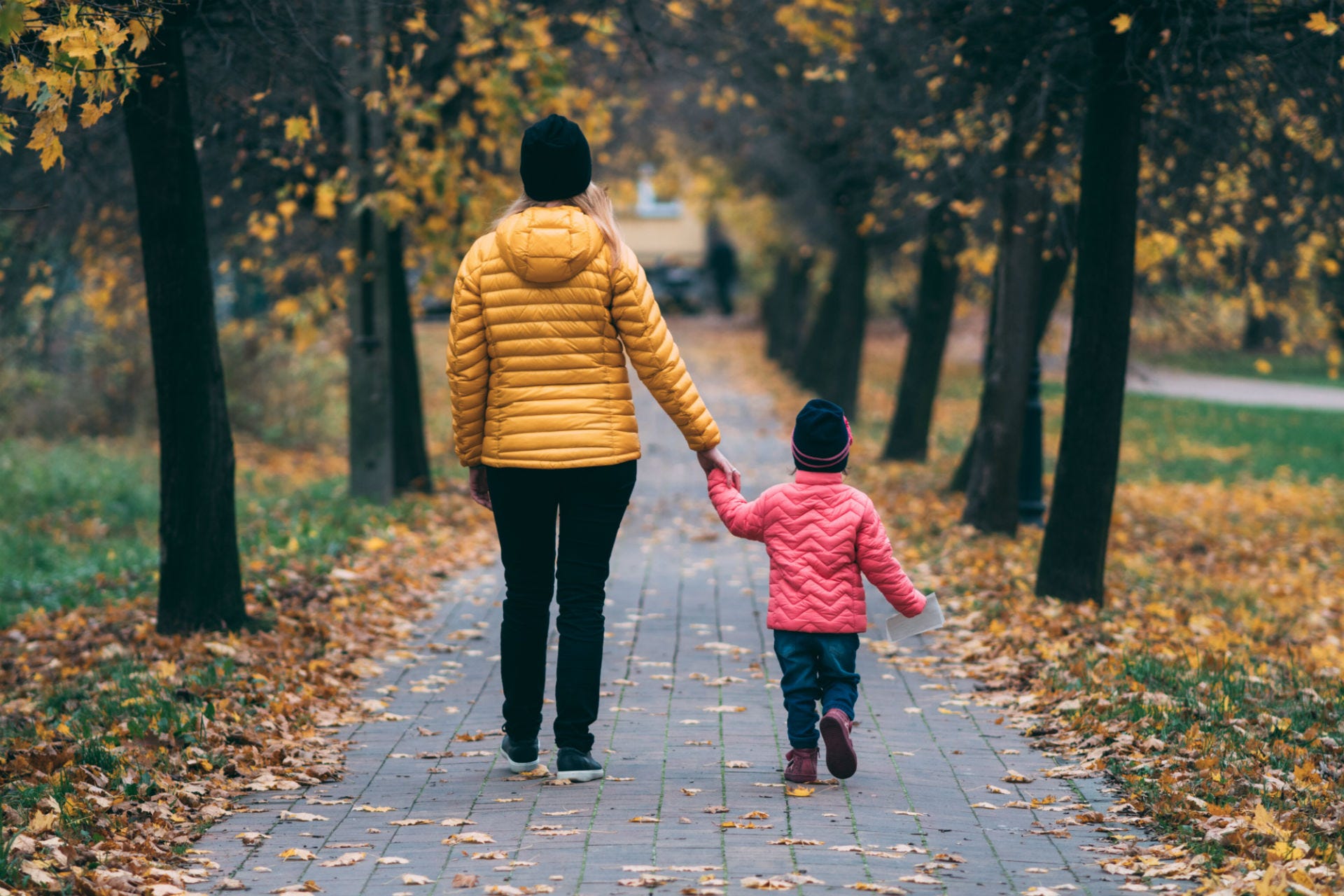
At 8:17 on a wet Thursday morning, 10-year-old Maya refused to get out of the car.
Her mother, Elena, had already turned off the engine. Children in bright raincoats hurried toward the school entrance, their backpacks bouncing behind them. A crossing guard waved traffic forward. Somewhere in the line of cars, a horn sounded.
Maya stared at her shoes.
The previous afternoon, two girls she considered friends had told her she could not sit with them at lunch. That evening, she complained of a stomachache. Now she said she was never going back to school.
Elena felt the familiar adult urge to make the problem smaller. “They’re just being mean,” she nearly said. “You can’t let them get to you.”
She was late for work. Maya had a math quiz. The school doors would close in three minutes.
But Elena stopped.
“That really hurt,” she said instead.
Maya began to cry.
The scene is a composite, not the story of one identifiable family. But the dilemma is common. A child encounters something painful, and an adult must decide what resilience is supposed to look like.
Is it getting out of the car? Ignoring the girls? Learning not to cry?
For years, resilience has been marketed to parents and schools as a kind of psychological armor. Children are told to develop grit, adopt a positive attitude and bounce back. The language suggests that hardship is a test of personal strength, and that successful children are those who remain steady under pressure.
Developmental research points to a different picture. Resilience is not invulnerability. It is not a personality type, and it is not proof that adversity caused no harm. It is the capacity to adapt, recover, seek help and continue developing despite difficulty.
One of the strongest foundations for that capacity is not toughness. It is the presence of at least one stable, committed and responsive adult.
That adult does not eliminate every disappointment or solve every problem. The more delicate task is to help a child bear what is happening without either abandoning the child to it or taking over completely.
In the car, Elena did not tell Maya she could stay home forever. She did not call the other girls’ parents from the parking lot. First, she helped her daughter settle.
They sat quietly for a moment. Elena asked Maya to put both feet on the floor. They took several slow breaths. Maya drank some water.
Then Elena asked, “What feels hardest about going inside?”
“Lunch,” Maya said.
That answer changed the problem. Maya was not refusing school in general. She was afraid of a particular hour in a particular place.
Together, they made a plan. Maya would go to class. Before lunch, she would tell her teacher what had happened. If she felt overwhelmed, she could eat in the counselor’s office that day. Elena walked her to the entrance.
This kind of response is sometimes called co-regulation. The term sounds clinical, but the process is ordinary. A child who cannot yet manage a surge of fear, anger or shame borrows some steadiness from an adult.
Children are not born knowing how to calm themselves, identify the source of distress and generate a workable plan. Those abilities develop through repeated experience. A responsive adult helps the child’s body settle, puts language around the emotion and supports the next step. Over time, the child begins to perform more of that sequence independently.
This does not mean agreeing with everything a child says or does. An adult can recognize fury without allowing hitting. A parent can acknowledge that school feels unbearable while still expecting attendance.
Validation is not surrender. It is an accurate recognition of the child’s experience. “You’re upset” is different from “You are right about everything.”
The distinction matters because children often cannot use advice until they feel understood. Commands to calm down can add frustration to distress. Reassurance can also misfire when it contradicts what the child is experiencing.
“It’s no big deal,” an adult may say.
To the child, it is.
A more useful response begins with what is true: “This is hard.” From there, the adult can help determine what kind of hard it is.
Some challenges are painful but manageable. A failed test, a lost game, an argument with a friend or disappointment over a role in a school play can become an opportunity to practice recovery.
Other adversities should not be reframed as growth opportunities. Bullying, abuse, family violence, unstable housing, hunger, discrimination and untreated illness are not exercises that children need in order to become stronger. They are conditions adults should work to reduce or stop.
That is one of the most important qualifications in the science of resilience. Coping skills can help a child survive a difficult environment. They do not make the environment acceptable.
A student who is being harassed may benefit from breathing exercises, but the school still has to intervene. A child living amid violence may learn ways to manage fear, but safety remains the central need. A teenager crushed by an impossible schedule may not need better time management so much as fewer demands.
When resilience is treated only as an inner trait, responsibility drifts downward. Institutions remain unchanged, caregivers receive another set of instructions, and children are asked to adapt to circumstances they did not create.
Public health approaches therefore place resilience within a broader system. Children do better when their environments are safer, their caregivers are supported and their families have access to food, housing, health care and dependable schools.
For Elena, the conversation with Maya did not end at the school door. That afternoon, she contacted the teacher.
The teacher had noticed tension at the lunch table but had assumed the children would resolve it. After speaking with Maya and the other students separately, she learned that the exclusion had happened repeatedly.
Now there were two tasks. Maya needed help deciding how to respond. The adults needed to address what was happening around her.
This is where popular advice about resilience often becomes confused. Adults are warned not to rescue children, and there is truth in that warning. Children need experience solving problems, tolerating frustration and recovering from mistakes. Constant intervention can unintentionally teach them that they cannot cope without someone taking control.
But refusing to intervene can be equally misguided. The goal is not maximum independence as quickly as possible. It is the right amount of support for the child and the challenge.
Researchers sometimes call this scaffolding, borrowing a term from construction. Temporary supports help a structure rise. As the structure becomes more stable, the supports are removed.
With children, scaffolding might mean asking, “What have you tried?” before offering a solution. It might mean helping a younger child name a feeling, rehearsing a difficult conversation with an older child or reviewing options with a teenager while leaving the final decision to the teenager.
The adult provides the smallest useful amount of help. First, the adult may do something for the child. Then the adult and child do it together. Eventually, the child does it independently while the adult remains available.
The challenges themselves must also be proportionate. Children build competence through difficulties that require effort but remain within reach.
A manageable struggle can teach, “I did not know what to do, but I figured out a next step.”
An overwhelming struggle may teach something else: “No matter what I do, I am on my own.”
In the days after the lunchroom episode, Maya practiced several specific skills. She named what she was feeling. She separated what she could control from what she could not. She considered different responses: confronting the girls, finding another place to sit, asking the teacher for help or inviting another classmate to lunch.
None of those options guaranteed that she would feel better. That was not the point.
Coping is not the power to produce a desired outcome. It is the ability to respond deliberately when the outcome is uncertain.
Children can be taught these skills. They can learn to notice the physical signs of rising distress, break a large problem into smaller pieces, consider consequences and ask for help. They can also learn to describe setbacks more accurately.
“I failed this test” is a statement about an event.
“I am stupid” is a judgment about identity.
Helping a child make that distinction is not empty positive thinking. It does not require pretending the test went well. It keeps one outcome from becoming a permanent conclusion about the self.
Research on programs designed to strengthen resilience offers cautious support for structured coping instruction, psychological therapies and physical activity, particularly among adolescents. But the evidence is not a catalog of miracle solutions.
Studies use different definitions of resilience. Programs vary in length and quality, and some trials are small. Improvements on questionnaires do not always show how children will function months later or under severe adversity.
Mindfulness, for example, may help some children notice emotions without reacting immediately. But reviews have found that its apparent benefits become less convincing when weaker studies are excluded. It may be a useful tool, not a universal remedy.
School-based programs show a similar pattern. A 2025 analysis of 38 randomized trials found a small average improvement in resilience. The results varied substantially among programs, and the researchers rated confidence in the overall estimate as very low.
That does not mean schools should abandon emotional skills lessons. It means that a weekly exercise cannot carry the entire burden.
A child may be taught to regulate emotions in the morning and then spend the afternoon in a chaotic, punitive or unsafe environment. A school may teach help-seeking while repeatedly failing to respond when students seek help. The surrounding culture can either reinforce the lesson or cancel it.
Resilience also grows through ordinary routines that are easy to overlook because they sound less impressive than a specialized program. Sleep, regular meals, movement, play, time outdoors and the chance to become competent at something can all make stress more manageable.
So can watching adults recover from their own mistakes.
A parent who says, “I’m too angry to answer well right now, so I’m going to take a minute,” demonstrates regulation in real time. A teacher who apologizes after reacting unfairly shows that authority and accountability can coexist.
No caregiver will model these things perfectly. Repair may matter almost as much as consistency.
An adult loses patience. Voices rise. Later, the adult returns and says, “I handled that badly. I’m sorry. Let’s try again.”
The child learns that conflict does not necessarily mean abandonment, and that mistakes can be followed by responsibility and reconnection.
But advice to caregivers must also reckon with the conditions under which caregiving occurs. A parent who is working two jobs, facing eviction, recovering from trauma or living with depression may understand exactly what a child needs and still struggle to provide it consistently.
Practical support may do more for the child than another parenting slogan. Stable housing, food assistance, treatment, respite care, financial help and reliable community support are not separate from resilience. They help create the conditions in which responsive relationships are possible.
There are also times when ordinary support is not enough.
A child with persistent nightmares, intrusive memories, severe avoidance, self-harm, suicidal thoughts, aggression, regression or major disruption at home or school may need professional assessment.
Children with serious post-traumatic stress symptoms can benefit from structured, trauma-focused treatment. One well-established approach, trauma-focused cognitive behavioral therapy, helps children understand their reactions, develop coping skills and process traumatic memories with a trained clinician.
This is not simply a more intensive version of telling a child to talk about what happened. Treatment depends on timing, safety, developmental level and the child’s symptoms. Resilience should never become a reason to delay care.
Several weeks after the morning in the car, Maya encountered another problem. A group project went badly, and one classmate blamed her in front of the others.
She came home angry and dropped her backpack in the hallway. Elena started toward her, prepared to ask what had happened.
“I need a minute,” Maya said. “Then I want help figuring out what to say tomorrow.”
It would be tempting to call that a happy ending. It was not. The conflict remained. Maya was still upset. The next conversation might go poorly.
But something had changed.
She could identify what she needed. She could delay an immediate reaction. She could ask for help without asking someone else to take over.
That is what resilience often looks like in real life: not a dramatic triumph, but a small expansion of capacity.
The child who once needed an adult to name the feeling begins to name it herself. The child who saw one impossible problem begins to see several possible next steps. The child who believed distress had to be hidden learns that it can be shared and survived.
The central question, then, is not how to make children harder. It is how to build a world around them in which difficulty is neither denied nor faced alone.
Children need challenges, but challenges within reach. They need autonomy, but not abandonment. They need coping skills, but also adults prepared to confront preventable harm. They need the freedom to fail and the confidence that failure will not cost them love, safety or belonging.
Resilience does not begin when a child stops needing other people.
It begins when a child learns, through experience, that help can be found and that, little by little, help can become strength.
Evidence & Source Transparency
Evidence First shows its work. The article ends above; this section is included so readers can inspect the main sources behind the factual claims.
The list below does not source every sentence. It focuses on the factual claims most important to the argument.
1. Supportive relationships and resilience
Claim or topic:
One of the strongest protective factors for children facing adversity is at least one stable, responsive relationship with a caring adult.
Source:
Harvard Center on the Developing Child, Supportive Relationships and Active Skill-Building Strengthen the Foundations of Resilience
Source type:
Academic research synthesis.
What it supports:
The report summarizes developmental research showing that dependable adult relationships can buffer stress and help children build self-regulation, planning and problem-solving skills.
Important caveat:
This is a synthesis of a broad research literature, not a single experiment or a precise estimate of how much one relationship improves outcomes.
2. Resilience depends on environments, not only individuals
Claim or topic:
Helping children cope successfully requires reducing preventable adversity and strengthening the families, schools and communities around them.
Source:
Centers for Disease Control and Prevention, Preventing Child Abuse and Neglect: Resources for Action
Source type:
Government public health guidance.
What it supports:
The CDC framework emphasizes safe environments, caregiver support, economic stability, access to services and other structural protections alongside individual coping skills.
Important caveat:
The framework is designed for prevention and population health. It does not measure the effectiveness of any one resilience-building technique.
3. Co-regulation and emotional development
Claim or topic:
Children often learn to manage strong emotions through repeated support from calm, responsive adults.
Source:
Harvard Center on the Developing Child, Serve and Return Interaction Shapes Brain Circuitry
Source type:
Expert organization and developmental research synthesis.
What it supports:
The source explains how responsive back-and-forth interactions with caregivers support emotional regulation, learning and healthy development.
Important caveat:
It describes the developmental process broadly. It does not test the specific fictional scene used in the article.
4. What school-based resilience programs can achieve
Claim or topic:
School-based resilience programs appear to produce small average improvements, but their effects vary and confidence in the overall estimate is limited.
Source:
Frontiers in Psychiatry, School-Based Interventions to Improve Resilience in Children and Adolescents: A Systematic Review and Meta-Analysis of Randomized Controlled Trials
Source type:
Peer-reviewed systematic review and meta-analysis.
What it supports:
The review of 38 randomized trials found a small average improvement in resilience measures while also reporting substantial variation among programs.
Important caveat:
The programs differed in design, quality and implementation, and the certainty of the pooled result was rated very low.
5. Evidence for coping skills, therapy and physical activity
Claim or topic:
Structured psychological interventions, coping-skills training and physical activity may improve resilience, particularly among adolescents.
Source:
Current Psychology, Interventions to Enhance Resilience in Adolescents: A Systematic Review and Network Meta-Analysis
Source type:
Peer-reviewed systematic review and network meta-analysis.
What it supports:
The study compared several types of interventions and found evidence that some psychological treatments, coping programs and physical activity can improve measured resilience.
Important caveat:
The evidence varied in quality. Apparent benefits for mindfulness became less convincing when lower-quality studies were excluded.
6. When children need more than general resilience support
Claim or topic:
Children with significant trauma symptoms may need professional assessment and trauma-focused treatment rather than general resilience advice alone.
Source:
National Institute for Health and Care Excellence, Post-Traumatic Stress Disorder: Recommendations
Source type:
Evidence-based clinical guideline.
What it supports:
The guideline recommends assessment and, depending on age, timing and symptom severity, approaches including individual trauma-focused cognitive behavioral therapy.
Important caveat:
The guidance applies to suspected or diagnosed post-traumatic stress disorder. It is not intended for every child experiencing ordinary stress, disappointment or conflict.
How to read this evidence
This article is the author’s analysis. The sources above are provided so readers can see where the factual claims come from and judge the evidence for themselves. Some sources support direct facts, while others provide context, estimates or background evidence.
Corrections and updates
If a factual error is identified, this post will be corrected in the web version with a dated note explaining the change. Because email versions cannot be edited after sending, the web version should be treated as the current version.