


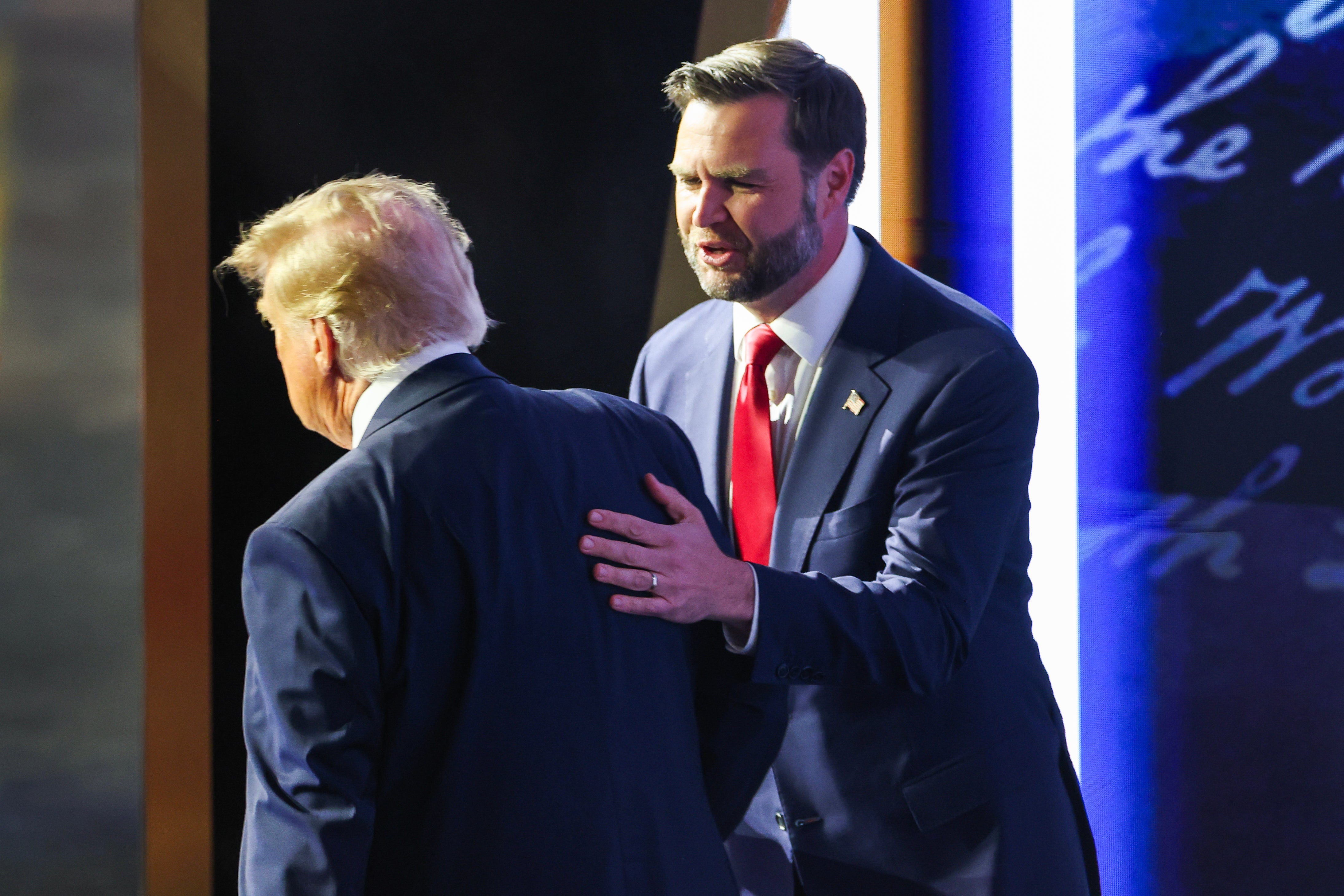
Donald Trump is heading into the November midterm elections with the kind of approval ratings that would leave most presidents in serious political trouble. Just 30 percent of Americans approve of his performance, according to an October survey by the Pew Research Center. Nearly seven in 10 disapprove, and even among those who voted for him in 2024, almost a third now disapprove of the job he is doing. Yet Trump has survived two impeachments, criminal prosecutions and an election defeat, only to return to the White House.
Now Democrats may have another opportunity to confront him. If they win control of Congress in November, they could launch investigations into his administration and potentially impeach him for a third time. There are serious reasons to consider it. Federal courts have repeatedly found that the administration exceeded its authority or violated constitutional protections, while other actions have raised questions about whether Trump has used presidential powers to punish opponents or reward allies. But another impeachment presents a problem that is easy to overlook: Even if Congress has good reasons to pursue it, what would the effort actually accomplish?
Impeachment is Congress’s way of formally accusing a president of serious wrongdoing. A simple majority in the House can approve the charges, but removing the president requires a two-thirds vote in the Senate. Those are very different hurdles, particularly when the president retains the loyalty of his own party. And in Trump’s case, the distinction raises a larger question about the difference between establishing wrongdoing and imposing meaningful consequences.
The concerns about Trump’s conduct go well beyond disagreements over his policies. Some involve a more fundamental question about the presidency: Can a president use the powers of his office against people who criticize or oppose him? In August, Reuters examined 93 cases involving challenges to the administration under the First Amendment, which protects freedom of speech, religion and the press. In 75 of those cases, federal judges had ruled against the government, often in disputes involving journalists, universities, law firms and protesters.
Not every ruling was final. Some were preliminary, and appeals courts had blocked or overturned decisions in 15 cases. The administration also prevailed in others. But even allowing for those qualifications, the findings reveal substantial judicial concern about the administration’s treatment of its critics. One particularly revealing example involved Perkins Coie, a law firm that had represented Trump’s political opponents. In 2025, Trump issued an executive order restricting the firm’s access to government facilities and affecting its ability to work with federal agencies. A federal judge struck down the order as unconstitutional, explaining that the government could not use its authority to punish people or businesses simply because the president disliked them.
A similar dispute arose in October 2026, when a federal judge ruled that Trump’s decision to exclude journalists from CNN, MS NOW and Politico from the White House was likely unconstitutional. Trump had publicly criticized their coverage, and the judge found that the restrictions appeared to punish the organizations for their viewpoints. The ruling was preliminary, but the underlying concern was familiar: Presidential authority was being used in ways that appeared intended to penalize criticism rather than serve a legitimate government purpose.
Other controversies have raised different questions about the limits of Trump’s power. In February, the Supreme Court ruled 6 to 3 that he lacked the legal authority he claimed to impose sweeping emergency tariffs. Reuters also reported in October that Trump had granted clemency to at least 85 public officials or political figures accused or convicted of corruption-related crimes, most of them Republicans or Trump supporters. Meanwhile, his military actions against Iran have raised questions about whether he exceeded his constitutional authority by conducting sustained hostilities without congressional authorization.
These are not equally strong cases for impeachment. Presidents have broad pardon powers, and favoritism does not necessarily establish corruption. Similarly, losing a case in court does not automatically mean a president committed an impeachable offense. But impeachment does not require a criminal conviction. It can apply to serious abuses of presidential power, particularly when a president uses public authority for improper purposes. In September, Democratic Representative Steve Cohen introduced 26 proposed articles of impeachment covering allegations ranging from political retaliation to financial conflicts of interest. Those allegations would need to be examined individually, but the documented conduct provides substantial grounds for congressional scrutiny.
Whether Americans would support taking that next step is another question, although the polling may surprise those who assume the public is exhausted by efforts to hold Trump accountable. An April survey by Strength in Numbers and Verasight found that 55 percent of American adults supported the House voting to impeach him, while 37 percent opposed it. A second survey in June found that 53 percent believed Congress already had grounds to impeach Trump, including some voters who supported him in 2024. Another survey, commissioned by an organization advocating impeachment, also found majority support. The questions and populations differed, and the advocacy-sponsored research warrants additional caution. Nevertheless, the results suggest that another impeachment would not necessarily begin as an unpopular effort opposed by most Americans.
Public support, however, cannot substitute for Senate votes. Even if Democrats win both chambers, they are unlikely to control anything close to the 67 seats required for conviction if all senators participate. Removing Trump would mean persuading a substantial number of Republicans to turn against their own president. After the January 6, 2021, attack on the Capitol, seven Republican senators joined Democrats in voting to convict him. The final tally was 57 to 43, ten votes short of what was needed. Trump was acquitted, and the Republican Party ultimately nominated him for president again.
A 2026 study examining 44 impeachment cases across different countries helps explain the difficulty. Researchers found that getting enough lawmakers to accuse a president of wrongdoing and getting enough lawmakers to remove him are fundamentally different challenges. Even serious allegations may not be enough when the president retains substantial support within his own party. That is especially relevant to Trump, whose influence over Republican politics remains considerable. Democrats could present a compelling case, win an impeachment vote in the House and still watch the Senate refuse to remove him.
The political consequences of such an outcome are harder to predict. Trump has become remarkably effective at portraying investigations and prosecutions against him as political persecution, and another impeachment would give him an opportunity to make that argument again. He could accuse Democrats of trying to overturn the voters’ decision, rally his supporters and present a Senate acquittal as proof that he had been unfairly targeted. But there is a difference between what Trump might say and what voters would believe.
There is surprisingly little evidence that his previous impeachments made him more popular. During his first impeachment, his approval ratings remained relatively stable. Gallup recorded a temporary increase around his February 2020 acquittal, but the improvement faded. Researchers studying that impeachment also found that providing people with additional facts about the proceedings did little to change their opinions. Political loyalties had a much stronger influence on how they interpreted the information. That helps explain why impeachment may be a particularly difficult political tool against Trump, but it does not establish that another attempt would benefit him.
A third impeachment might uncover serious misconduct, deepen public disapproval or force Republican lawmakers to defend actions many voters consider unacceptable. It might also energize Trump’s supporters and shift attention away from his unpopular policies. The research offers no reliable way to predict which effect would be greater, particularly when so many Americans already hold strong opinions about him.
There is also an unusual complication if impeachment somehow succeeds. Vice President JD Vance would become president, potentially entering the 2028 election as the incumbent rather than as the vice president of an unpopular administration. That might give him an opportunity to establish his own political identity and appeal to voters who have grown tired of Trump. Or he might inherit responsibility for the administration’s failures. Either way, removing Trump would not necessarily leave Democrats better positioned for the next presidential election.
These uncertainties help explain why congressional investigations may offer Democrats a different approach. With control of Congress, they could examine possible corruption, financial conflicts and the use of federal authority against political opponents. They could demand documents, question administration officials and scrutinize how taxpayer money is being spent. Unlike impeachment, such oversight would not depend on securing a two-thirds Senate majority, although enforcing congressional demands can present its own difficulties.
There is evidence that investigations can influence public opinion. A 2014 study published in The Journal of Politics examined more than 3,500 congressional investigative hearings over five decades. The researchers found that increased investigations were associated with declining presidential approval. An accompanying experiment suggested that accusations made through congressional investigations could carry more weight with voters than similar accusations made elsewhere. Those findings indicate that congressional scrutiny can have consequences beyond the hearing room, though they cannot tell us exactly how voters would respond to investigations of Trump today.
There is another consideration. Trump is already deeply unpopular, and Americans have other priorities. In Pew’s October survey, 84 percent of registered voters said the economy was very important to their congressional vote. Just 36 percent said the same about investigations into Trump. Among people supporting Democratic congressional candidates, however, 63 percent considered those investigations very important, compared with only 7 percent of Republican supporters.
The findings reveal a genuine tension. Many Americans are unhappy with Trump’s performance and primarily concerned about their finances, while a large share of Democratic voters also wants his conduct examined. Extensive investigations could uncover wrongdoing and strengthen accountability, but they could also consume political attention without producing meaningful new findings. Much would depend on what Congress discovered, whether voters considered the findings important and whether lawmakers could use the information to constrain future abuses.
Congress has other tools as well. It can scrutinize government spending, challenge executive actions through legislation and use its oversight powers to expose misconduct. These approaches have limits, especially when the president can veto legislation, but they do not require removing him from office. They also allow Congress to focus on specific abuses rather than committing itself to a prolonged impeachment battle whose outcome in the Senate is largely foreseeable.
None of this eliminates the constitutional case for impeachment. If the evidence establishes serious presidential misconduct, Congress has a responsibility to consider an appropriate response, even when doing so carries political costs. A Senate unwilling to convict does not make an abuse of power acceptable, and an unsuccessful impeachment can still establish an important public record. But the decision should be grounded in the seriousness of the conduct and what Congress can realistically accomplish, rather than the assumption that impeachment itself will weaken Trump.
The evidence points to a distinction that is easily lost in the political debate. There are substantial grounds for investigating Trump’s exercise of presidential power, meaningful public support for impeachment and serious legal questions about actions his administration has taken. What is much less certain is whether a third impeachment would remove him, change his behavior or improve either party’s political position.
Trump has already survived two impeachments. A third could expose further wrongdoing and reaffirm constitutional limits. It could also end with another acquittal, leaving him in office and his political support largely unchanged. Democrats may soon have the authority to pursue either path, but the real challenge is larger than deciding whether to impeach him again.
It is determining how Congress can impose meaningful consequences for abuses of presidential power when removing the president may be politically impossible.
Evidence & Source Transparency
Evidence First shows its work. The article ends above; this section is included so readers can inspect the main sources behind the factual claims.
The list below does not source every sentence. It focuses on the factual claims most important to the argument.
1. Trump’s Approval Rating and Voter Priorities
Claim or topic:
Trump’s approval rating fell to 30 percent in October 2026. The economy remained a higher priority for voters overall than investigations into his administration.
Source:
Pew Research Center, October 8, 2026
Source type:
Primary public-opinion research.
What it supports:
Pew found that 30 percent of Americans approved of Trump’s performance, while 68 percent disapproved. Among registered voters, 84 percent considered the economy very important to their congressional vote, compared with 36 percent who said the same about investigations into Trump.
Important caveat:
The survey measures opinions at a particular point in time. It does not establish how voters would respond to impeachment or investigations in 2027.
2. First Amendment Rulings and Retaliation Against Critics
Claim or topic:
Federal judges repeatedly ruled against Trump’s administration in cases involving freedom of speech, religion and the press, including actions affecting political opponents and critical news organizations.
Source:
Source type:
Original investigative journalism based on court records; legal reporting.
What it supports:
Reuters identified 75 adverse lower-court rulings among 93 First Amendment cases it examined. Its reporting includes the executive order targeting Perkins Coie and judicial findings concerning retaliation against critics.
The October reporting addresses a preliminary ruling protecting White House access for journalists from CNN, MS NOW and Politico.
Important caveat:
Not all 75 rulings were final. Some were preliminary, and appeals courts stayed or overturned decisions in 15 cases. The October press-access ruling was also preliminary. These judicial findings do not automatically establish impeachable offenses.
3. The Supreme Court’s Tariff Decision
Claim or topic:
The Supreme Court ruled that Trump lacked authority under the International Emergency Economic Powers Act to impose his sweeping emergency tariffs.
Source:
U.S. Supreme Court, Learning Resources, Inc. v. Trump, February 20, 2026
Source type:
Primary Supreme Court ruling.
What it supports:
In a 6-to-3 decision, the Court held that the statute did not authorize the president to impose tariffs.
Important caveat:
The ruling establishes that the tariffs lacked authorization under the statute Trump invoked. It does not establish that imposing them constituted an impeachable offense.
4. Trump’s Clemency Decisions
Claim or topic:
Trump granted clemency to numerous public officials and political figures accused or convicted of corruption-related offenses, with Republicans and Trump supporters accounting for most recipients.
Source:
Source type:
Original investigative journalism.
What it supports:
Reuters identified at least 85 public officials or political figures accused or convicted of corruption-related crimes who received clemency. Most were Republicans or Trump supporters.
Important caveat:
The pattern does not establish that individual clemency decisions were unlawful, corrupt or exchanged for personal benefits. The president possesses broad constitutional pardon powers.
5. The Proposed Articles of Impeachment
Claim or topic:
Representative Steve Cohen introduced 26 proposed articles of impeachment against Trump in September 2026.
Source:
Congressman Steve Cohen, September 24, 2026
Source type:
Primary congressional statement and proposed impeachment charges.
What it supports:
Cohen’s office published 26 proposed articles alleging abuses of presidential authority, including political retaliation, misuse of the pardon power and financial conflicts.
Important caveat:
The proposed articles establish what Cohen alleged, not that every allegation has been proven or independently adjudicated.
Source needed: The article also refers to disputes over whether Trump’s sustained military actions against Iran exceeded his constitutional authority. The existing article does not identify a specific underlying legal opinion, congressional record or other source sufficient to assess that claim independently.
6. Public Support for Impeachment
Claim or topic:
Multiple surveys conducted in 2026 found majority support for impeaching Trump or agreement that grounds for impeachment existed.
Source:
Strength In Numbers/Verasight, April 22, 2026
Strength In Numbers/Verasight, June 25, 2026
Lake Research Partners, April 2, 2026
Source type:
Primary public-opinion research.
What it supports:
The April Strength In Numbers/Verasight survey found 55 percent support for a House impeachment vote. Its June survey found that 53 percent believed grounds for impeachment existed.
The Lake Research Partners survey, commissioned by Free Speech For People, found 52 percent support among likely voters.
Important caveat:
The surveys used different questions and populations. The two Strength In Numbers surveys share a polling partnership, while the Lake Research Partners survey was commissioned by an impeachment advocacy organization.
Support for impeachment does not necessarily mean support for conviction and removal.
7. The Difficulty of Removing Trump
Claim or topic:
Impeaching a president and removing that president are separate constitutional and political challenges.
Source:
U.S. Senate, February 13, 2021, Official Roll Call
Farag, Montini and Schemm, European Political Science Review, June 2026
Source type:
Primary government record and peer-reviewed academic research.
What it supports:
The Senate record confirms that Trump’s second impeachment ended with 57 senators voting guilty and 43 voting not guilty, short of the required two-thirds majority.
The academic study examined 44 impeachment cases and analyzed the different political conditions involved in approving impeachment and securing removal.
Important caveat:
The 2026 study uses cross-national comparisons and cannot predict how individual U.S. senators would vote in a future trial. The constitutional voting threshold is established, but the outcome of a hypothetical third impeachment is not.
8. The Political Effects of Trump’s Previous Impeachment
Claim or topic:
Trump’s first impeachment did not produce a sustained increase in his approval rating, and research found that providing additional factual information had limited influence on people’s attitudes.
Source:
Bose and Burnett, PS: Political Science & Politics
Source type:
Primary public-opinion research and peer-reviewed academic research.
What it supports:
Gallup documented a temporary rise in Trump’s approval around his February 2020 acquittal, followed by a return to 44 percent in March.
Bose and Burnett examined the effects of providing respondents with factual information about Trump’s first impeachment and the role of partisanship in their responses.
Important caveat:
The Gallup figures do not establish that impeachment caused the approval changes. Other major events were occurring simultaneously. The academic study’s information intervention does not replicate the effects of an entire impeachment proceeding.
Neither source establishes whether a third impeachment would help or hurt Trump politically.
9. Congressional Investigations and Presidential Approval
Claim or topic:
Congressional investigations can influence public opinion and reduce presidential approval.
Source:
Kriner and Schickler, The Journal of Politics, 2014
Source type:
Peer-reviewed academic research combining historical data analysis and a survey experiment.
What it supports:
The researchers examined more than 3,500 congressional investigative hearings and over 50 years of presidential approval data. They found that increased investigative activity was associated with declining presidential approval.
Their experiment also found that allegations made through congressional investigations could carry greater influence than equivalent allegations made outside Congress.
Important caveat:
The historical analysis covered 1953 through 2006, before Trump’s presidency. Its findings cannot establish whether investigations in 2027 would have the same effects or whether they would be more effective than impeachment.
How to read this evidence
This article is the author’s analysis. The sources above are provided so readers can see where the factual claims come from and judge the evidence for themselves. Some sources support direct facts, while others provide context, estimates, or background evidence.
Production transparency
Evidence First uses artificial intelligence extensively for research, analysis, drafting, and editing. AI may generate substantial portions of the written article. Human editorial judgment determines the questions investigated, evaluates the evidence and competing explanations, reviews important factual claims and sources, determines what conclusions the evidence supports, and approves the article for publication. AI-generated statements are not treated as evidence; conclusions must be supported by the cited sources.
Corrections and updates
If a factual error is identified, this post will be corrected in the web version with a dated note explaining the change. Because email versions cannot be edited after sending, the web version should be treated as the current version.