


At the beginning, the war was sold as a campaign of overwhelming American power with a clear strategic purpose: break Iran’s military machine, stop its nuclear threat and force Tehran into submission.
Months later, the war’s center of gravity has shifted to a narrow body of water.
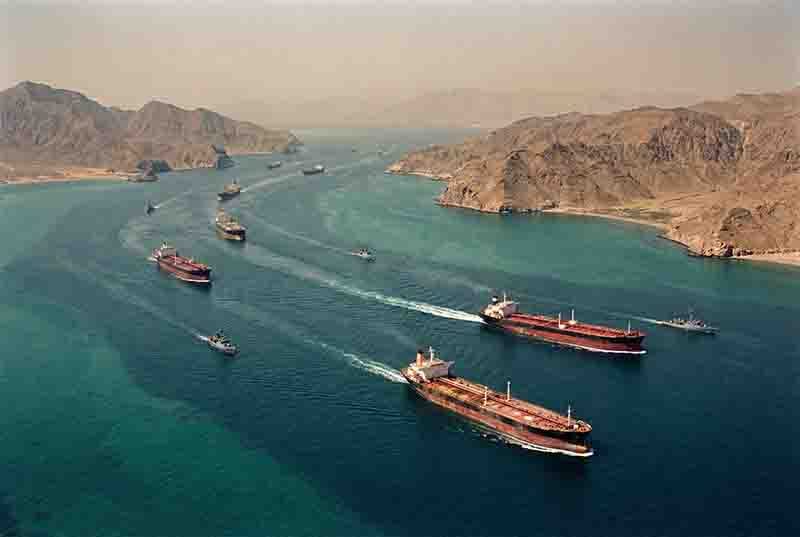
The Strait of Hormuz, a channel most Americans rarely think about but through which a major share of the world’s oil and liquefied natural gas moves, has become the most important fact in the conflict. It was not the headline objective when the war began. It is now one of the issues around which cease-fire talks, sanctions relief, oil prices and U.S. credibility appear to revolve.
That shift says a lot about where the war started, where it stands now, and why the United States cannot yet call it a clean strategic victory.
Where the War Started
When President Trump launched Operation Epic Fury, the administration described the mission in maximal terms. The stated military objectives were to destroy Iran’s ballistic missile and drone capabilities, destroy its navy, and cripple its defense-industrial base so Iran could no longer project power beyond its borders.
Layered on top of those military goals was the larger strategic rationale: Iran’s nuclear program. The administration repeatedly argued that Iran could not be allowed to obtain a nuclear weapon. That was the core reason the war mattered. Missiles, drones, warships and proxy groups were dangerous. But the nuclear program was the strategic prize.
There were also broader ambitions. Trump and senior officials spoke about ending Iran’s ability to arm proxies, threatening the regime’s survival and forcing Tehran to accept American terms. At the beginning, the war was not framed as a narrow maritime dispute. It was framed as a decisive confrontation with the Iranian state.
On the conventional battlefield, the United States appears to have achieved meaningful damage. The administration says Iran’s missile arsenal, drone capabilities, air force, navy and defense-industrial base were badly degraded. Those are significant battlefield claims, and even allowing for administration spin, there is enough public reporting to say Iran’s conventional military position is worse than when the war began.
But wars are not judged only by what gets destroyed. They are judged by what political result that destruction produces.
And that is where the picture becomes much murkier.
The Deal That Was Lost
There is another piece of context that matters here: the United States had once been inside a nuclear agreement that put Iran’s program under strict limits and international inspection.
The 2015 nuclear deal, negotiated under President Barack Obama with Iran, the European Union and five other world powers, was far from a perfect settlement. It did not solve Iran’s missile program. It did not end Iranian support for regional proxies. And critics argued that some of its nuclear limits expired too soon.
But it did do something important. It capped Iran’s enrichment, limited its uranium stockpile, restricted centrifuges and gave international inspectors regular access. When President Trump withdrew from the agreement in 2018 and reimposed sanctions, Iran was still widely assessed to be complying with the deal’s nuclear limits. Iran later began breaching those limits, expanding enrichment and reducing transparency.
That history matters because today’s negotiations are, in many ways, an attempt to recover the central benefits of the agreement the United States left behind: verifiable limits, inspector access, uranium accounting and sanctions relief tied to compliance.
The war did not begin in a vacuum. It grew out of a nuclear confrontation that became more dangerous after the old framework collapsed.
That does not mean Trump alone created the Iran nuclear problem. Iran had pursued nuclear capabilities before the deal. Tehran chose to violate limits after the U.S. withdrawal. Later diplomacy failed to restore the agreement. And the original deal had real shortcomings.
But it does mean the central question now is unavoidable: after abandoning one imperfect system for containing Iran’s nuclear program, did war produce a better one?
So far, the public evidence says no.
The Nuclear Problem Was Not Solved
The biggest problem for any claim of American victory is the nuclear file.
Iran’s physical nuclear infrastructure has been damaged. That matters. But the decisive questions are not simply whether buildings were hit. They are whether Iran’s enriched uranium has been accounted for, whether centrifuge capacity has been destroyed or monitored, whether inspectors have access, and whether Iran’s breakout timeline has been meaningfully lengthened.
On those questions, the public evidence is weak.
The International Atomic Energy Agency has said it cannot verify the current size, composition or whereabouts of Iran’s enriched uranium stockpile. Before the conflict, Iran had hundreds of kilograms of uranium enriched up to 60 percent, a level far closer to weapons-grade than ordinary civilian fuel. Nuclear analysts focused on proliferation have emphasized that knowing the location and status of this material is now the overriding priority.
That is not a small technical issue. It is the heart of the matter.
If Iran retains nuclear material, technical knowledge and some surviving enrichment capacity, then the nuclear threat has not disappeared. It may be more hidden, harder to verify and more politically valuable than before. A bomb program is not just a factory. It is material, machines, know-how, secrecy and political decision-making.
The current diplomatic framework does not yet solve that. The interim deal, as reported, sets no durable public limits on Iran’s nuclear program. That issue is pushed into follow-up negotiations. The United States says Iran has accepted long-term inspections. Iran has disputed key parts of that claim.
That is why the war cannot yet be called a strategic nuclear success. The United States may have damaged Iran’s nuclear infrastructure. It has not publicly demonstrated that it has removed or neutralized the core nuclear risk.
The Unexpected Winner: Hormuz Leverage
Iran’s most important achievement may not be military at all. It may be that Tehran proved the Strait of Hormuz can be turned into a weapon.
Iran did not need to defeat the U.S. Navy. It only needed to make the route risky enough that oil markets, insurers, tanker operators and Gulf states felt the danger. Mines, drones, missile boats and speedboats can do what battleships cannot: inject uncertainty into the arteries of the global economy.
That uncertainty changed the negotiation.
The early American objective was to destroy Iran’s ability to project power. The immediate diplomatic objective now is to reopen and stabilize the Strait of Hormuz. Public reporting on the proposed memorandum of understanding has described it as centered on reopening the Strait and lifting the U.S. naval blockade, while negotiations over Iran’s nuclear program would come afterward.
That is a major shift.
Iran entered the war facing American military power. It emerged badly damaged, but with a demonstrated ability to impose global economic costs. Iranian officials have framed the interim arrangement as a victory. Tehran is also expected to receive access to frozen assets and temporary sanctions relief under parts of the framework.
That does not mean Iran won the war outright. Its navy, air defenses, missile infrastructure and broader military apparatus took serious hits. But it does mean Iran found leverage that Washington could not ignore.
In practical terms, Iran managed to convert geographic vulnerability into bargaining power. The United States can strike Iranian targets. But Iran can threaten a chokepoint that matters to the entire world.
That is why the Strait is now central.
A War of Partial Wins and Unresolved Stakes
The cleanest way to understand the war is this:
The United States won conventionally. It has not yet won strategically.
Iran lost conventionally. It has not yet lost strategically.
The United States damaged Iran’s military. Iran survived as a regime. The United States degraded Iranian missiles, drones, naval assets and air defenses. Iran retained nuclear ambiguity and maritime leverage. The United States forced Iran to negotiate. Iran appears to have forced the United States to prioritize Hormuz stability and sanctions relief before the hardest nuclear questions are settled.
This is not an Iranian triumph in the simple sense. Tehran is weaker than it was militarily. Its economy has been strained. Its regional network is under pressure. Its use of Hormuz as leverage also makes it look like a threat to global commerce, which could invite future coalitions against it.
But it is also not a clean American victory. If the war began with the promise of ending Iran’s nuclear threat, destroying its regional power and forcing a favorable settlement, the current outcome falls short. The nuclear issue remains unresolved. Hormuz remains fragile. The deal is temporary. The hardest questions have been deferred.
The war has produced leverage, not resolution.
The Best Move Now
The best strategic move for the United States is not to keep expanding the war’s objectives. It is to narrow them.
The United States should define success around four achievable goals: a verifiable nuclear rollback, a stable and open Strait of Hormuz, reduced Iranian support for proxy attacks, and avoidance of a wider regional war.
First, Washington should make the nuclear issue the real test of the deal. That means full IAEA access, a verified accounting of enriched uranium, limits on enrichment, limits on centrifuge manufacturing and a breakout timeline long enough to be strategically meaningful. Without those, the war’s central objective has not been achieved.
Second, sanctions relief should be staged and reversible. Iran should receive economic benefits only as it meets verifiable obligations. If sanctions are waived while inspections remain disputed and uranium remains unaccounted for, the United States risks giving up leverage before securing the central objective.
Third, the United States should turn Hormuz from an emergency into a rules-based security arrangement. That means no Iranian tolls, no arbitrary transit permissions, no attacks on shipping, a demining process, clear response rules and de-escalation channels that prevent every incident from becoming a new war.
Fourth, Washington should avoid making regime change the organizing principle. Regime-change rhetoric may sound strong, but unless the United States is actually prepared to own the consequences of regime collapse, it can muddy the objective and make diplomacy harder. The realistic goal is not to remake Iran. It is to constrain Iran.
Finally, the United States should bring Gulf states, Europe and Asian energy importers into the settlement. Hormuz is not just an American problem. It is a global trade problem. The more Iran’s behavior is framed as a threat to international commerce rather than simply a U.S.-Iran dispute, the less room Tehran has to turn the Strait into a private bargaining chip.
The Bottom Line
This war began as a test of American power. It has become a test of American strategy.
The United States proved it can hurt Iran. Iran proved it can make that pain global.
That is why the next phase matters more than the last one. If Washington converts its military gains into a verified nuclear agreement and a stable Hormuz arrangement, the war could still become a strategic win. If not, it will look like something far less satisfying: a costly conventional success that left the most important problem unresolved and handed Iran a new form of leverage in the very waterway the world cannot afford to lose.