


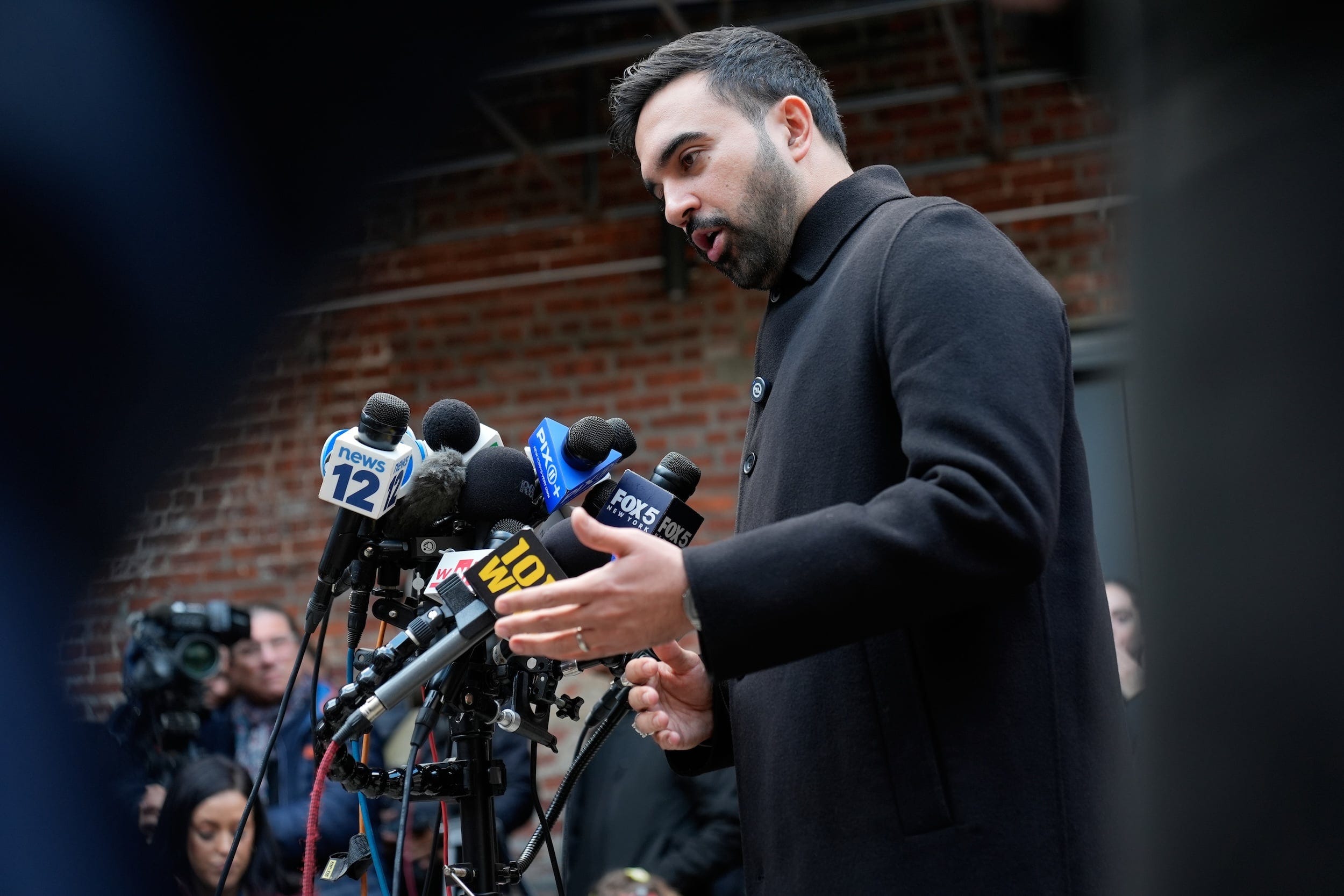
Zohran Mamdani’s critics weaken their case when they reach for the most explosive version of it.
Calling him a communist antisemite may satisfy his harshest critics, but the evidence does not establish that charge. The more accurate concern is also the more useful one. Mamdani is an anti-capitalist democratic socialist whose economic instincts run against the market foundations of successful mixed economies, and whose Israel politics appear one-sided in ways that raise legitimate questions about judgment, moral consistency, and coalition.
The argument does not depend on guessing what Mamdani privately believes. It turns on public judgment. Mamdani sees real failures in the status quo. The question is whether his answers are disciplined by evidence, alert to tradeoffs, and morally consistent, or narrowed by ideology.
Mamdani’s appeal is easy to understand. He speaks to a city where daily life feels punishingly expensive. Rent is crushing. Child care is unaffordable. Buses are slow and costly. Groceries feel like another monthly bill that keeps moving out of reach. For many New Yorkers, politics has sounded abstract for too long. Mamdani offers something concrete: free buses, universal child care, rent freezes, city-supported grocery stores, and higher taxes on the wealthy and large corporations.
To supporters, this sounds practical, even obvious. If people cannot afford the basics, government should step in. That impulse is not wrong. A serious mixed economy requires government to act where markets fail, where basic services are underprovided, and where ordinary people are exposed to risks they cannot reasonably manage alone.
The most successful economies tend to combine private enterprise, competition, and growth with public investment, social insurance, regulation, and redistribution. Markets create wealth. Government keeps markets from becoming cruel, unstable, monopolistic, or indifferent to human need.
Mamdani’s critique of capitalism is not imaginary. It is central to his politics. His appeal comes from the idea that New York’s private markets have failed ordinary people. That is where the disagreement begins. Most Democrats seek to reform capitalism. DSA seeks to replace it. Mamdani is not simply proposing a larger safety net inside capitalism; he is aligned with a movement that describes capitalism not merely as flawed or unequal but as a system that “must” be replaced with democratic socialism. Its program calls for public ownership of the largest corporations and essential industries.
That distinction matters because the policy argument is more complicated than the label. Communism is a radical branch of socialism, but not all socialism is communism. Some of Mamdani’s more controversial ideas have a mixed-economy logic. A public grocery option in underserved neighborhoods is not the same thing as nationalizing the food industry. A rent freeze is not the same thing as abolishing landlords. Higher taxes on millionaires are not the same thing as confiscating wealth. The real question is not whether these ideas are communist. They are not. It is whether they move New York toward the kind of mixed economy that works, or toward a politics that distrusts markets too much to use them well.
That is where the Nordic comparison, often invoked by American progressives, becomes so important and so often misunderstood. Countries such as Denmark, Sweden, and Norway have large welfare states, strong unions, and high taxes. They also rely heavily on private firms, competitive markets, and global trade. They discipline capitalism. They do not generally replace ordinary production and retail with public ownership.
Steven Pinker’s formulation in Enlightenment Now is closer to the lesson of successful rich democracies: “The empirical picture at present suggests that people flourish most in liberal democracies with a mixture of civic norms, guaranteed rights, market freedom, social spending, and judicious regulation.” That is not an argument for government-free capitalism. It is a reminder that the evidence from modern prosperity vindicates mixed economies in which markets remain central and government regulates, taxes, insures, and corrects them.
That is the standard by which Mamdani’s agenda should be judged. His policy instincts often mirror a suspicion of markets that goes beyond ordinary regulation. His central promise is not simply to regulate markets better or redistribute more of their gains. It is to intervene directly in areas where markets are producing unacceptable outcomes, sometimes as provider, sometimes as price-setter, and sometimes as subsidized competitor.
Some of Mamdani’s proposals can fit inside a reasonable mixed economy. Universal child care is not radical by international standards. It can help parents work, ease family pressure, and benefit children. Public transit subsidies are common. A city may reasonably treat buses more like libraries or parks than like ordinary consumer products.
Other proposals are more troubling because they reveal the risk in Mamdani’s approach: a habit of treating prices as enemies rather than information, and private providers as obstacles rather than institutions that also create value.
Rent freezes are the clearest example. They sound humane because, in the short run, they often are. A family in a rent-stabilized apartment does not experience a rent freeze as ideology. It experiences it as relief. It may mean staying near a child’s school, a job, a doctor, or a support network.
Yet the best evidence on rent control shows the tradeoff that slogans usually avoid. A major American Economic Review study of San Francisco found that rent control helped covered tenants stay in their homes, but also led landlords to reduce rental housing supply by about 15 percent, likely increasing rents elsewhere. The researchers also found that landlords reduced supply by selling to owner-occupants or redeveloping buildings.
This does not mean every tenant protection is bad. It means rent freezes are not an affordability strategy by themselves. They protect some current renters while potentially worsening the shortage for everyone else. In a city with too few homes, freezing prices without rapidly expanding supply can amount to rationing scarcity while refusing to confront its cause.
The grocery proposal raises a similar concern. City-supported grocery stores are presented as a response to high food prices and gaps in access. That goal is legitimate. Food access is a real public concern, and government already plays a major role through school meals, food stamps, emergency food programs, and support for underserved neighborhoods.
The problem comes when government uses subsidy to compete directly with ordinary businesses and then treats lower prices as proof that public provision is better. Recent reporting says private grocers have sued over New York’s city-backed grocery initiative, arguing that subsidized stores offering steep discounts would amount to unfair competition against private retailers operating on thin margins. Business Insider reported that the challenged plan involves city-backed stores by 2029, discounts on essential goods, and public support such as rent or property-tax advantages.
A private grocer has to cover rent, labor, theft, spoilage, insurance, taxes, and energy costs. If a city-backed store receives special public support and undercuts prices, some shoppers may benefit in the short term. But the policy may also weaken the private stores most residents still depend on. That is not proof the plan will fail. It is proof that the concern is serious.
This is the economic case against Mamdani at its strongest. He is not outside democracy, and he is not proposing Soviet communism. But his politics are clearly anti-capitalist in orientation. The best evidence favors capitalism disciplined by strong public institutions. Mamdani’s political identity and some of his signature policies lean toward replacing or suppressing market mechanisms rather than improving them.
That is the central policy objection. And it leads naturally to the broader question that runs through Mamdani’s politics: when his framework identifies a real injustice, does it also narrow what he is willing to see?
The same question follows Mamdani from economics into foreign policy. Does his framework clarify the problem, or narrow what he is willing to see? Palestinian suffering is real. Israel is a state, and states can be criticized harshly. But the question is whether Mamdani’s politics allow him to see the whole moral field clearly.
The evidence again requires precision. Mamdani is not proven to be an antisemite. He has condemned antisemitism. Reporting has noted that he has condemned Hamas while supporting Palestinian rights and rejecting many mainstream pro-Israel formulations.
To be fair, that record has to be separated from the harshest accusation. Mamdani’s record does not support the claim that he hates Jews, supports Hamas, or wants Jewish New Yorkers to feel unsafe. He has condemned Hamas’s Oct. 7 attack as a horrific war crime, called for the hostages’ return, spoken about antisemitism as a real crisis, and pledged to protect Jewish New Yorkers. As mayor, he also kept the city’s Office to Combat Antisemitism in place and appointed Phylisa Wisdom, a Jewish communal advocate who had led the New York Jewish Agenda, to direct it.
The harder question is not whether those statements count. They do. It is whether they are central enough to his politics to answer the concern about imbalance.
Mamdani has become one of the most prominent sharply anti-Israel and anti-Zionist figures in American politics. He supports the Boycott, Divestment, and Sanctions movement and has aligned himself with Palestinian-rights activism. For many Jewish New Yorkers, especially after Hamas’s Oct. 7, 2023 attack and the war in Gaza, this is not an abstract foreign-policy disagreement. It is about whether their fear is being heard, minimized, or treated as a political inconvenience.
The problem is not criticism of Israel. The problem is imbalance. Mamdani’s public emphasis appears to fall overwhelmingly on Palestinian suffering and Israeli wrongdoing. There is far less visible attention to Hamas’s murder of Israeli civilians, hostage-taking, authoritarianism, or the ways Palestinian civilians are also endangered by armed groups operating from civilian areas.
That asymmetry matters. A politician can be formally against antisemitism and still participate in a politics that makes many Jews feel that Jewish vulnerability is recognized only when it fits the movement’s preferred narrative.
Still, asymmetry is not the same thing as hatred. The evidence does not establish that Mamdani personally hates Jews, supports attacks on Jews, or celebrates Oct. 7. The better-supported conclusion is narrower and more defensible. He is strongly anti-Zionist, harshly critical of Israel, and too politically comfortable around movements where the line between Palestinian advocacy and antisemitic or violence-excusing rhetoric is not always clearly policed.
The issue is not whether Mamdani is responsible for every word spoken by allies or relatives. He is not. The issue is whether his standard of moral judgment changes when the subject shifts from Israel to people closer to his own politics.
That concern becomes more concrete in coalition politics. Endorsements matter. Repeated patterns matter. Mamdani’s endorsement of Darializa Avila Chevalier is one example. Chevalier reportedly attended a controversial pro-Palestinian rally on Oct. 8, 2023, one day after Hamas’s attack on Israel. City & State reported that she later defended her attendance, while Jewish Telegraphic Agency reported that she doubled down on having gone. Mamdani did not attend that rally, and endorsement is not the same as adopting everything an endorsee has said or done. But voters are entitled to consider such choices as evidence of the political world he is helping empower. They suggest a tolerance for certain risks, especially within a pro-Palestinian left whose boundaries around Jewish trauma and Hamas violence have sometimes been badly drawn.
The same question becomes more delicate with Rama Duwaji, Mamdani’s wife. She is a separate person, not an extension of his candidacy, and her statements and online activity should not be treated as Mamdani’s own record. Still, she is part of the personal and political world around him, and his response to scrutiny of that world is relevant to the question of judgment.
The scrutiny has not been vague. AP summarized prior reporting that Duwaji had shared posts praising female Palestinian militants involved in plane hijackings and bombings in the 1960s and early 1970s, shared a 2015 post saying Tel Aviv “shouldn’t exist,” liked an Instagram post that appeared to cheer Hamas’s Oct. 7 attack, and illustrated an essay by an author who had described Oct. 7 as “spectacular” and used dehumanizing language about Jewish Israelis.
Mamdani emphasized Duwaji’s integrity, said she should be considered separately from his political career, and said she had no prior knowledge of the author’s controversial statements when commissioned for the illustration. He called that author’s rhetoric “patently unacceptable” and “reprehensible.” Those facts do not prove Mamdani’s beliefs. They matter because they show how he responds when troubling rhetoric comes from inside his own orbit.
His father, the scholar Mahmood Mamdani, raises a different question. He is not evidence of Zohran’s intent. He is evidence of context. A parent’s worldview can plausibly shape the intellectual world in which a politician develops. Mahmood Mamdani has long been critical of Zionism and Israeli statehood as structured around Jewish national sovereignty. Critics cited by Times of Israel say he underplays Jewish historical vulnerability and antisemitism, minimizes Palestinian political agency and internal divisions, and treats Zionism too much through a colonial frame.
There is also direct evidence that these themes are not incidental in Zohran Mamdani’s political story. Mahmood himself has described Zohran’s campaign as built around two issues: affordability and “a critique of the state of Israel,” praising his son’s “refusal to budge” or “soften his critique of the state of Israel.” Al Jazeera has also reported Mahmood saying that “social justice” and “the rights of Palestinians” were “near and dear” to Zohran.
Together, that context makes it more plausible that Palestine is not merely one issue among many for Mamdani, but one of the formative commitments of his political life. His Muslim identity may be part of that formation, as may his father’s postcolonial scholarship, his wife’s Syrian-American background and public artistic focus, and the political world in which he came of age. None of that proves hostility toward Jews, and none of it should be reduced to religion alone. But it helps explain why Israel and Palestine may occupy such a central place in his moral imagination, and why his public emphasis on the conflict can appear so lopsided.
That context matters, but it has limits. Anti-Zionism can overlap with antisemitism, and sometimes does, but it is not automatically identical to hatred of Jews. Family influence can help explain a politician’s formation, but it does not establish intent.
The contrast is what matters. Mamdani speaks about Israel with unusual force for a New York mayoral politician. He is far more guarded when the controversy involves people in his own political or personal orbit. That contrast does not prove bigotry or bad faith. It does, however, strengthen the concern that his moral scrutiny is uneven, severe toward Israel, more forgiving toward allies and intimates whose words or actions many Jewish leaders, commentators, and voters have described as alarming.
That leaves the real question, not what label can be pinned on Mamdani, but what kind of judgment he brings to office.
By that standard, the concern is serious but bounded. Economically, Mamdani is aligned with an explicitly anti-capitalist movement, and some of his signature proposals move away from the market side of the mixed-economy model with the strongest track record. On Israel and Palestine, his politics are strongly anti-Zionist and often morally lopsided. His coalition gives reasonable grounds for concern about the boundaries he draws around inflammatory or violence-excusing rhetoric. His family’s views and conduct may provide context, but they do not prove his own beliefs.
Can a mayor who promises affordability avoid the traps of overpromising, underfunding, and suppressing prices without increasing supply? Can a politician rooted in anti-Zionist activism draw a bright enough line against antisemitism, not only in his own statements but among allies and supporters? Can he show Jewish New Yorkers that their fears are not merely obstacles to his agenda, while still insisting that Palestinian suffering be taken seriously?
Those are not gotcha questions. They are governing questions.
Mamdani’s appeal comes from the fact that he names real problems. New York is too expensive. Families are strained. Many voters do feel abandoned by a politics that praises affordability while delivering little of it. But naming a problem is not the same as having the right remedy, and moral passion is not the same as sound judgment.
The evidence points to a politician whose critique resonates because much of it begins from real hardship. It also points to real risks: economic policies with known tradeoffs, ideological allies who openly seek to move beyond capitalism, and a Middle East politics that too often seems to hear one people’s trauma more clearly than another’s.
The fair case against Mamdani is not that the worst accusations are proven. It is that the careful concerns are serious enough.
Evidence & Source Transparency
Evidence First shows its work. The article ends above; this section is included so readers can inspect the main sources behind the factual claims.
The list below does not source every sentence. It focuses on the factual claims most important to the argument.
1. Mamdani, DSA and anti-capitalist politics
Claim or topic:
Mamdani is aligned with the Democratic Socialists of America, and DSA’s own stated position is not merely to reform capitalism but to replace it with democratic socialism.
Source:
Democratic Socialists of America: What Is Democratic Socialism?
DSA National Political Committee statement on Mamdani’s win
Source type:
Primary organization documents.
What it supports:
These sources support the article’s claim that DSA describes capitalism as a system to be replaced and that Mamdani is publicly celebrated by DSA as part of its socialist political project.
Important caveat:
DSA’s platform does not prove Mamdani personally endorses every DSA position. The article treats DSA alignment as evidence of ideological orientation, not as proof of communism.
2. Democratic socialism versus communism
Claim or topic:
The article distinguishes democratic socialism from communism and argues that Mamdani’s proposals are not equivalent to Soviet-style communism.
Source:
Al Jazeera: Fact check: Is Zohran Mamdani a communist?
Washington Post: Zohran Mamdani calls himself a democratic socialist. Here’s what that means
Source type:
Reputable journalism and expert analysis.
What it supports:
These sources support the article’s distinction between calling Mamdani a democratic socialist and calling him a communist. They also provide background on his platform and how democratic socialism differs from both mainstream Democratic politics and authoritarian communist systems.
Important caveat:
Definitions of socialism and democratic socialism are contested. The article uses the distinction to avoid overstatement, not to settle every theoretical debate.
3. Mixed economies, Pinker and liberal-democratic institutions
Claim or topic:
The article argues that successful modern societies combine markets with public investment, social spending, rights, civic norms and regulation.
Source:
Steven Pinker, Enlightenment Now excerpt
Steven Pinker’s official page for Enlightenment Now
Source type:
Book excerpt and author page.
What it supports:
The Pinker quote supports the article’s mixed-economy frame: people flourish in liberal democracies with “a mixture of civic norms, guaranteed rights, market freedom, social spending, and judicious regulation.”
Important caveat:
For formal publication, the best source is the print or ebook edition of Enlightenment Now. The linked excerpt is useful for reader transparency but should be checked against the book text if exact pagination matters.
4. Rent control and housing-supply tradeoffs
Claim or topic:
Rent freezes and rent control can protect current tenants while reducing rental supply and worsening affordability for others.
Source:
American Economic Review: The Effects of Rent Control Expansion on Tenants, Landlords, and Inequality
Source type:
Peer-reviewed academic research.
What it supports:
The study supports the article’s claim that rent control in San Francisco helped covered tenants remain in place but also led landlords to reduce rental housing supply, with broader affordability tradeoffs.
Important caveat:
This is evidence from San Francisco, not New York. It is relevant because it identifies a general policy tradeoff, but local housing markets differ.
5. City-backed grocery stores and competition concerns
Claim or topic:
The article discusses concerns that city-backed grocery stores could undercut private grocers through subsidies or public support.
Source:
Business Insider: NYC federal antitrust lawsuit over Mamdani city-run grocery stores
Source type:
Reputable journalism.
What it supports:
This source supports the claim that private grocers have challenged the city-backed grocery plan and argued that subsidized stores could create unfair competition.
Important caveat:
A lawsuit or business objection is not proof that the policy will fail. It supports the existence of a serious tradeoff, not a settled conclusion.
6. Mamdani, Hamas, hostages, antisemitism and the city antisemitism office
Claim or topic:
The article says Mamdani has condemned Hamas’s Oct. 7 attack, called for the hostages’ return, spoken about antisemitism, pledged to protect Jewish New Yorkers and appointed Phylisa Wisdom to lead the city’s Office to Combat Antisemitism.
Source:
AP: New York’s Jewish community divided, anxious over Mamdani, an Israel critic
NYC Mayor’s Office: Mayor Mamdani announces new executive director of Mayor’s Office to Combat Antisemitism
Mayor’s Office to Combat Antisemitism
Source type:
Reputable journalism and government source.
What it supports:
These sources support the article’s balancing claim that the record does not establish that Mamdani hates Jews, supports Hamas or wants Jewish New Yorkers unsafe.
Important caveat:
This evidence supports Mamdani’s public condemnations and official actions. It does not resolve the separate interpretive question of whether those statements are central enough to answer concerns about imbalance.
7. Mamdani’s Israel/Palestine posture and the claim of imbalance
Claim or topic:
The article argues that Mamdani’s public emphasis appears much stronger on Palestinian suffering and Israeli wrongdoing than on Hamas, hostages, antisemitism or Palestinian civilian endangerment by armed groups.
Source:
AP: New York’s Jewish community divided, anxious over Mamdani, an Israel critic
ABC News: Mamdani touts democratic socialist policies and political rise
Source type:
Reputable journalism and analysis.
What it supports:
These sources support the article’s description of Mamdani as a prominent critic of Israel, supporter of Palestinian rights and figure whose Israel/Palestine politics have generated concern among many Jewish New Yorkers.
Important caveat:
The article’s claim about “imbalance” is an interpretation of public emphasis, not a quantitative content analysis. A fuller source section could add speeches, interviews and social-media posts to document frequency and intensity more systematically.
8. Darializa Avila Chevalier and the Oct. 8 rally
Claim or topic:
The article discusses Mamdani’s endorsement of Darializa Avila Chevalier and her attendance at a controversial pro-Palestinian rally on Oct. 8, 2023, one day after Hamas’s attack.
Source:
City & State: Avila Chevalier attended the Oct. 8 pro-Palestinian rally
JTA: Darializa Avila Chevalier doubles down on attending Oct. 8 pro-Palestinian rally
Source type:
Reputable journalism.
What it supports:
These sources support the article’s claim that Chevalier attended and defended her attendance at the rally, and that Mamdani’s endorsement is relevant to questions about coalition and judgment.
Important caveat:
Endorsing a candidate is not the same as adopting every statement or action by that candidate. The article uses the episode as coalition evidence, not proof of Mamdani’s personal beliefs.
9. Rama Duwaji’s reported online activity and Mamdani’s response
Claim or topic:
The article describes reported scrutiny of Rama Duwaji’s online activity and artistic work related to Israel, Palestine and Oct. 7, while emphasizing that her conduct is not proof of Mamdani’s beliefs.
Source:
AP: Rama Duwaji apologizes for harmful posts
Source type:
Reputable journalism.
What it supports:
The AP report supports the article’s description of the contested posts, likes and illustration, as well as Mamdani’s response that Duwaji should be considered separately from his political career.
Important caveat:
Duwaji is a separate person. The article treats this material as relevant to Mamdani’s judgment and response, not as evidence that her views are his views.
10. Mahmood Mamdani, family context and Palestine as political formation
Claim or topic:
The article argues that Mahmood Mamdani’s scholarship and public comments help explain why Palestine may be one of the formative commitments of Zohran Mamdani’s political life.
Source:
Times of Israel: How the politics of Mamdani’s parents shaped NYC’s new mayor
Democracy Now: Mahmood Mamdani on Zohran Mamdani’s campaign
Al Jazeera: Mahmood Mamdani says Palestine helped motivate son Zohran’s mayoral run
Source type:
Reputable journalism, interview and analysis.
What it supports:
These sources support the article’s claim that Mahmood Mamdani has publicly linked Zohran’s campaign to affordability and criticism of Israel, and that Palestinian rights were described as “near and dear” to Zohran.
Important caveat:
Family influence can provide context, but it does not establish Zohran Mamdani’s intent, motives or private beliefs.
11. Identity, religion and source limitations
Claim or topic:
The article says Mamdani’s Muslim identity may be part of his moral formation, while warning that his views should not be reduced to religion alone.
Source:
AP: Who is Zohran Mamdani? State lawmaker seeks to become NYC’s first Muslim and Indian American mayor
Al Jazeera: Mahmood Mamdani says Palestine helped motivate son Zohran’s mayoral run
Source type:
Reputable journalism and interview-based reporting.
What it supports:
AP supports the factual claim that Mamdani is Muslim and identifies him as New York City’s first Muslim and Indian American mayor. AP also reports that he cofounded his college’s Students for Justice in Palestine chapter and that his pro-Palestinian views were a major point of tension in the mayoral race. Al Jazeera reports Mahmood Mamdani saying that “social justice” and “the rights of Palestinians” were “near and dear” to Zohran, and that Zohran was unwilling to trade, compromise or minimize those issues.
Important caveat:
These sources support the article’s cautious claim that religion, upbringing and political formation may be relevant context. They do not prove that Muslim identity caused Mamdani’s Israel/Palestine views, and the article should continue to say the issue “may” be part of his formation rather than treating religion as a proxy for his politics.
How to read this evidence
This article is the author’s analysis. The sources above are provided so readers can see where the factual claims come from and judge the evidence for themselves. Some sources support direct facts, while others provide context, estimates, or background evidence.
Corrections and updates
If a factual error is identified, this post will be corrected in the web version with a dated note explaining the change. Because email versions cannot be edited after sending, the web version should be treated as the current version.