


In October 2018, a major climate report acquired a much simpler public meaning: We had 12 years left.
The underlying report, issued by the Intergovernmental Panel on Climate Change, did not say the world would end in 2030. It examined what would be required to limit global warming to 1.5 degrees Celsius above preindustrial levels and concluded that doing so would require global carbon dioxide emissions to fall sharply by 2030 and reach roughly net zero around the middle of the century. That was an urgent finding, but it was not a prediction that catastrophe would begin on a fixed date.
For years, climate change was often presented through two competing stories. One said that the warnings were exaggerated, the models were unreliable and the science was too uncertain to justify much concern. The other suggested that humanity was approaching a hard deadline after which disaster would become unavoidable. With decades of climate projections now behind us, both stories can be tested against what actually happened.
The result is more interesting than either side suggested. The central science held up better than many critics claimed, but the consequences were also less like the sudden apocalypse that some public rhetoric implied. What the science actually described was a growing risk problem, one in which additional warming increases the likelihood and cost of serious harm. That story was harder to turn into a slogan, but it also aged better.
What actually held up
The first question is whether the basic science was reliable. On that point, the record is strong. Greenhouse gases trap heat in the atmosphere. Human activity, especially the burning of fossil fuels, has sharply increased their concentration. The planet has warmed. Sea level has risen. Extreme heat has intensified. Over time, the evidence increasingly established human activity as the dominant cause of recent global warming.
The World Meteorological Organization reported that 2025 was about 1.43 degrees Celsius warmer than the average from 1850 to 1900, a period commonly used as a baseline for preindustrial conditions. The years from 2015 through 2025 were the 11 warmest years in the observational record. A single unusually warm year does not mean the world has permanently crossed a particular long-term threshold. Natural variation still pushes individual years up and down, but the long-term warming trend is clear.
Older climate models also performed better than many people remember. A 2020 study in Geophysical Research Letters examined climate models published between 1970 and 2007 and compared their projections with subsequent temperature observations. Most performed reasonably well at projecting global temperature change. When researchers accounted for differences between the greenhouse gas emissions the models assumed and the emissions that actually occurred, their performance improved further. The study found no systematic tendency among those models to overestimate warming.
That does not mean climate models predict everything well. Global average temperature is easier to project than rainfall, storms or agricultural conditions in a particular place decades into the future. Some old forecasts were too warm. Others were too cool. But the core relationship between greenhouse gases and global temperature held up much better than the public memory of failed climate predictions often suggests.
Getting the temperature trend broadly right was important. But temperature was never the real end point of the warning. The question was what a warmer climate would do to the systems people depend on.
What warming actually looks like
If climate change was serious, some public rhetoric implied, then it had to look like a civilization-ending catastrophe. The science never required that conclusion.
For most people, climate change will not arrive as one giant event labeled “global warming.” It is more likely to appear as a growing burden on systems people already depend on: power grids, water supplies, roads, farms, insurance markets, public health systems and coastal infrastructure. Climate change also does not cause every heat wave, drought, flood or wildfire. Weather extremes have always occurred, and local conditions still matter. What warming can do is change the probability or severity of some events.
Extreme heat is one example. A hotter day may sound like an inconvenience. Enough additional extreme heat becomes a public health and infrastructure problem. Outdoor work becomes more dangerous. Electricity demand rises as more people need cooling. Hospitals, schools and workplaces have to prepare for conditions that occur more often.
Food systems face a similar kind of pressure. Climate change does not mean crops fail everywhere or that the world suddenly runs out of food. Some regions may benefit for a time from longer growing seasons or other changes. But farming depends on temperature, rainfall and water availability. Severe heat and drought can reduce harvests, livestock productivity and farm labor.
The more concerning situations are the ones in which several stresses overlap. A major growing region suffers drought while another has a poor harvest. Food prices rise. A country that depends heavily on imports has less ability to absorb the shock. At the same time, heat may reduce worker productivity and increase electricity demand. Climate risks can compound in other ways, too. Drought can reduce hydropower just as more people need air conditioning. Crops can suffer while wildfire smoke adds another health burden. Flooding can damage infrastructure at the same time insurance becomes more expensive.
Researchers call these compound and cascading risks. No single event needs to overwhelm a country for the combination to become severe. Imagine a coastal city that is already hot in summer. Over time, it faces more frequent heat waves, heavier demand on its power system, more expensive cooling, greater flood risk during storms and rising insurance costs in low-lying neighborhoods. None of those problems is catastrophic on its own. Together, they force households, businesses and local governments to spend more just to maintain roughly the same level of safety and reliability.
This is the realistic climate threat. It is less cinematic than the rhetoric surrounding it, but it is not trivial. The harm comes from many pressures accumulating across places and decades. The science did not need to predict extinction to describe a serious problem.
Why a few degrees matter
The temperature numbers used in climate discussions can sound strangely small. The difference between 1.5 and 2 degrees Celsius may seem trivial in ordinary conversation, but global temperature is not like the thermostat in a living room. It is an indicator of how much the entire climate system has shifted.
Coral reefs provide one of the clearest examples. The IPCC has assessed that warm-water coral reefs are projected to decline by a further 70 to 90 percent at 1.5 degrees Celsius of global warming, with losses greater than 99 percent at 2 degrees. Those estimates carry uncertainty, and individual reefs will not respond identically. But they show how half a degree in the global average can translate into a very large difference in risk for an ecosystem.
Species extinction is another irreversible concern. The IPCC has estimated that among the terrestrial species it assessed, roughly 3 to 14 percent could face a very high risk of extinction at 1.5 degrees Celsius of warming, with the range increasing at higher temperatures. That does not mean all of those species will disappear. It means the probability of extinction becomes very high for a growing share of the species assessed. Species confined to a mountaintop, island or narrow climatic range are especially vulnerable because they can eventually run out of suitable habitat.
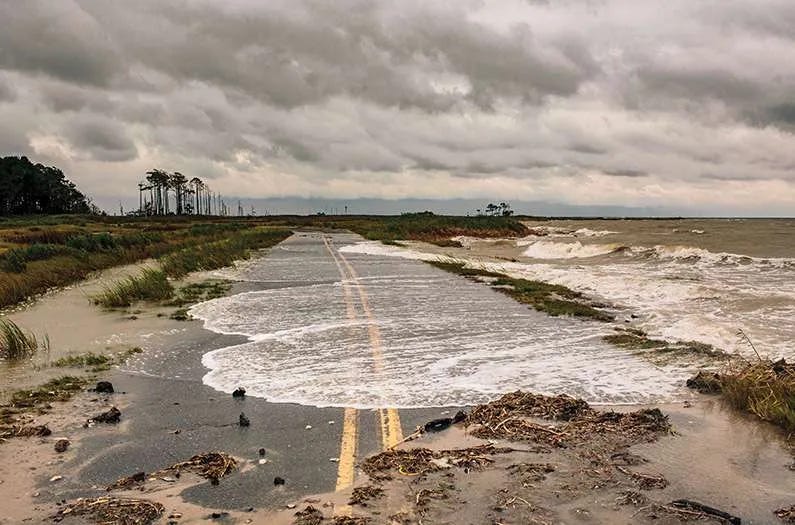
Sea-level rise shows the same logic over a much longer timescale. The immediate concern is not that major coastal cities suddenly disappear beneath the ocean. It is that higher seas make flooding more frequent, storm surges more damaging and coastal protection more expensive. Sea-level rise also does not stop in 2100. Oceans and ice sheets respond slowly, so sea levels can continue rising for centuries even after temperatures stabilize. Some places will defend themselves for a long time with seawalls, pumps and other infrastructure. Others may eventually find retreat more practical than permanent defense.
The United Nations Environment Programme estimated in 2025 that policies then in place would put the world on a course of roughly 2.8 degrees Celsius of warming this century. Full implementation of countries’ existing climate pledges would lower that projection to roughly 2.3 to 2.5 degrees. Those are projections, not destiny. Policies change. Technologies improve. Energy systems evolve.
Nor is 2.8 degrees a scientific code for “the world ends here.” Its significance is that many risks increase as warming rises. Heat extremes intensify. Ecosystems face greater losses. Some forms of adaptation become harder. The chances of some irreversible changes increase.
This is why the science speaks in gradients rather than deadlines. A world at 1.7 degrees is not “safe” while a world at 2 degrees is “doomed.” But the risks are not identical either. The same is true of 2.5 and 3 degrees. There is no single cliff. There is a worsening slope.
The existence of that slope also means the future is not predetermined. How much people suffer depends not only on temperature, but also on how well societies respond. Flood barriers, better drainage, water management, cooling, stronger buildings, heat-warning systems and more resilient infrastructure can all reduce harm. A wealthy society that invests heavily in adaptation can experience the same physical hazard very differently from a poor society that lacks those protections.
But adaptation has limits. Protecting a city from occasional flooding is one problem. Protecting it from steadily rising seas for generations is another. Adjusting farming practices to modest changes in weather is easier than adapting indefinitely to increasing heat or water stress. Saving an ecosystem becomes impossible once the species that make it up are gone.
Each additional increment of warming can therefore make adaptation harder and more expensive. Adaptation can reduce harm. Emissions cuts can limit how much additional warming occurs. Neither makes all risk disappear.
Mainstream climate assessments also do not establish human extinction as the likely result of warming expected this century. Claims that climate change will probably eliminate humanity go beyond the central scientific evidence. But “not human extinction” is an extremely low standard for deciding whether a problem matters.
We do not judge a disease by asking whether it will wipe out the species. A recession can cause enormous hardship without permanently destroying the economy. A war does not need to end civilization to devastate millions of lives. Climate change should be judged by the same ordinary standard. How much harm is likely? Who bears the costs? Which losses cannot be reversed? How much can be prevented? How much worse does the problem become as warming rises?
For humanity as a whole, the most realistic danger is not extinction. It is a hotter, more expensive, more disruptive and less biologically rich world, with some of the greatest burdens falling on people and places least able to absorb them.
That conclusion sat awkwardly between the two stories that dominated the debate. Climate change was far more serious than “the science is too uncertain to worry about,” but more measured than “we are approaching a fixed date after which the world is doomed.” That was not a political compromise. It was where the evidence pointed.
How the debate went wrong in both directions
The problem was that this kind of conclusion is difficult to turn into a slogan.
For years, American journalism often made climate science look more divided than it was. A 2004 study of coverage in The New York Times, The Washington Post, the Los Angeles Times and The Wall Street Journal found that the journalistic habit of giving opposing sides similar weight often created a misleading impression about the state of the science.
The problem became known as “balance as bias.” When the great majority of relevant research points in one direction, giving a small number of dissenters equal prominence can make uncertainty appear much larger than it really is. A later study published in Nature Communications in 2019 found a related pattern. Researchers compared the media visibility of hundreds of climate scientists with hundreds of prominent climate contrarians across roughly 100,000 media articles. The contrarians received disproportionately high attention relative to their scientific standing.
For years, one prominent distortion made the science look less settled than it was. At other times, another made it sound more absolute than it was. As scientific confidence increased and public concern grew, complicated findings were sometimes compressed into slogans that sounded more certain and more catastrophic than the assessments themselves.
The 2018 IPCC report is a useful example. Its actual message was that limiting warming to 1.5 degrees required rapid emissions reductions. Public discussion often transformed that finding into a hard deadline after which catastrophe would become unavoidable.
The urgency was real. The cliff was not.
A deadline is easier to communicate than a probability distribution. “Twelve years left” is more memorable than saying that each additional increment of warming raises risk. But the second statement is much closer to the science. Once the countdown became part of public memory, every missed milestone could also be interpreted as evidence that climate science itself had failed.
The science was simplified in opposite directions: sometimes into excessive uncertainty, and at other times into excessive certainty. Strip away both simplifications, and the record becomes clearer.
What aged well
Scientists did not get everything right. Individual scientists have made poor predictions. Models have limitations. Estimates change as new evidence arrives. Local climate impacts are much harder to predict precisely than the basic global temperature response to greenhouse gases.
But the central framework held up. The planet warmed substantially. Human influence emerged clearly as the dominant cause. Older models generally captured the broad temperature response to rising greenhouse gases. Sea level rose. Extreme heat intensified. Evidence accumulated that many risks increase as warming rises.
What aged poorly were the binary stories built around that science. The skeptical version said the science was too uncertain and the predictions too unreliable to take seriously. The apocalyptic version suggested that the science pointed to a single deadline, a hard threshold or a likely end to civilization. Neither version aged especially well.
The science described something less dramatic and more durable: a range of outcomes. A world that warms by 1.7 degrees is generally preferable to one that warms by 2.5. A world at 2.5 degrees is generally preferable to one at 3. There is no point at which preventing additional warming suddenly stops mattering.
The public debate wanted a verdict: hoax or catastrophe, safe or doomed, deadline met or deadline missed. The science kept describing a risk curve. More warming meant more danger. Less warming meant less danger. Adaptation could reduce some harms. Some losses would still be irreversible. Uncertainty remained, but uncertainty did not erase the direction of the evidence.
That was always a harder story to tell. It was also the one that aged best. The science was less apocalyptic than some of the rhetoric surrounding it suggested. It was more consequential than its loudest critics allowed.
And it aged better than the debate around it.
Evidence & Source Transparency
Evidence First shows its work. The article ends above; this section is included so readers can inspect the main sources behind the factual claims.
The list below does not source every sentence. It focuses on the factual claims most important to the argument.
1. Human-caused warming and rising climate risk
Claim or topic:
Human activity is the dominant cause of recent global warming, and climate risks generally increase as warming rises.
Source:
IPCC Sixth Assessment Report, Synthesis Report
Source type:
Expert organization / scientific assessment.
What it supports:
The IPCC concludes that human activities have unequivocally caused global warming and that risks to people and ecosystems increase with additional warming.
Important caveat:
The IPCC synthesizes a large scientific literature rather than reporting a single experiment. Confidence varies by specific impact, region and level of warming.
2. Recent global temperatures
Claim or topic:
Recent years have been the warmest in the observational record, with 2025 about 1.43 degrees Celsius above the 1850 to 1900 average.
Source:
World Meteorological Organization, State of the Global Climate 2025
Source type:
Expert organization / observational climate data.
What it supports:
The WMO provides the global temperature estimates used in the article and documents the long-term warming trend.
Important caveat:
A single unusually warm year is not the same as permanently crossing a long-term warming threshold. Year-to-year natural variability still matters.
3. How well older climate models performed
Claim or topic:
Older climate models generally did a reasonably good job projecting subsequent global temperature change.
Source:
Source type:
Academic research.
What it supports:
The study compared climate projections published from 1970 to 2007 with what later occurred. It found that most models performed reasonably well, especially after accounting for differences between assumed and actual greenhouse gas forcing.
Important caveat:
This finding applies most directly to global temperature projections. Climate models are less precise for many local and regional outcomes.
4. Risks at 1.5, 2 and higher degrees of warming
Claim or topic:
Relatively small differences in global average warming can produce large differences in risk, including for coral reefs, species and other ecosystems.
Source:
IPCC Special Report on Global Warming of 1.5°C and IPCC Sixth Assessment, Working Group II
Source type:
Expert organization / scientific assessment.
What it supports:
The assessments support the article’s discussion of sharply increasing risks to warm-water coral reefs, rising extinction risk for some species, and broader increases in ecological and human vulnerability as warming rises.
Important caveat:
These are risk estimates, not guarantees that a specific percentage of species or ecosystems will disappear. Outcomes vary by region, species and adaptation capacity.
5. Current-policy warming projections
Claim or topic:
Under policies in place in 2025, the world was projected to warm by roughly 2.8 degrees Celsius this century, with lower warming if national pledges are fully implemented.
Source:
United Nations Environment Programme, Emissions Gap Report 2025
Source type:
Expert organization / estimate and analysis.
What it supports:
The UNEP report provides the projected warming ranges used to explain why the difference between roughly 2, 2.5 and 3 degrees matters.
Important caveat:
These are scenario-based projections, not fixed predictions. Future policies, technology, energy use and emissions can change the outcome.
6. Media “balance” and climate science
Claim or topic:
Some earlier U.S. climate coverage made the science appear more evenly divided than the scientific literature justified.
Source:
Boykoff and Boykoff, “Balance as Bias,” Global Environmental Change
Source type:
Academic research.
What it supports:
The study examined major U.S. newspaper coverage from 1988 to 2002 and found that journalistic norms of balance often gave disproportionate weight to views questioning human-caused climate change.
Important caveat:
The study covers a specific group of newspapers and an earlier period. It should not be generalized to all climate journalism or all media eras.
7. Media visibility of climate contrarians
Claim or topic:
Climate contrarians received more media attention than their scientific standing alone would predict.
Source:
Petersen, Vincent and Westerling, Nature Communications
Source type:
Academic research.
What it supports:
The study compared hundreds of prominent climate scientists and contrarians across a large media sample and found disproportionate visibility for contrarian voices relative to their scientific authority.
Important caveat:
Media visibility is not the same as influence on public opinion, and the imbalance varied across different types of media.
8. The 2018 “12 years” framing
Claim or topic:
The IPCC’s 2018 emissions pathway was widely simplified in public discussion into a fixed 12-year climate deadline.
Source:
IPCC Special Report on Global Warming of 1.5°C
Source type:
Primary scientific assessment.
What it supports:
The IPCC report supports the underlying claim that limiting warming to 1.5 degrees required steep emissions reductions by 2030 and roughly net-zero carbon dioxide emissions around midcentury.
Important caveat:
The report did not say catastrophe would begin in 2030 or that climate action would become pointless after that date. A separate media source would be useful if the published article wants to document a specific “12 years left” headline or quotation.
How to read this evidence
This article is the author’s analysis. The sources above are provided so readers can see where the factual claims come from and judge the evidence for themselves. Some sources support direct facts, while others provide context, estimates, or background evidence.
Corrections and updates
If a factual error is identified, this post will be corrected in the web version with a dated note explaining the change. Because email versions cannot be edited after sending, the web version should be treated as the current version.