


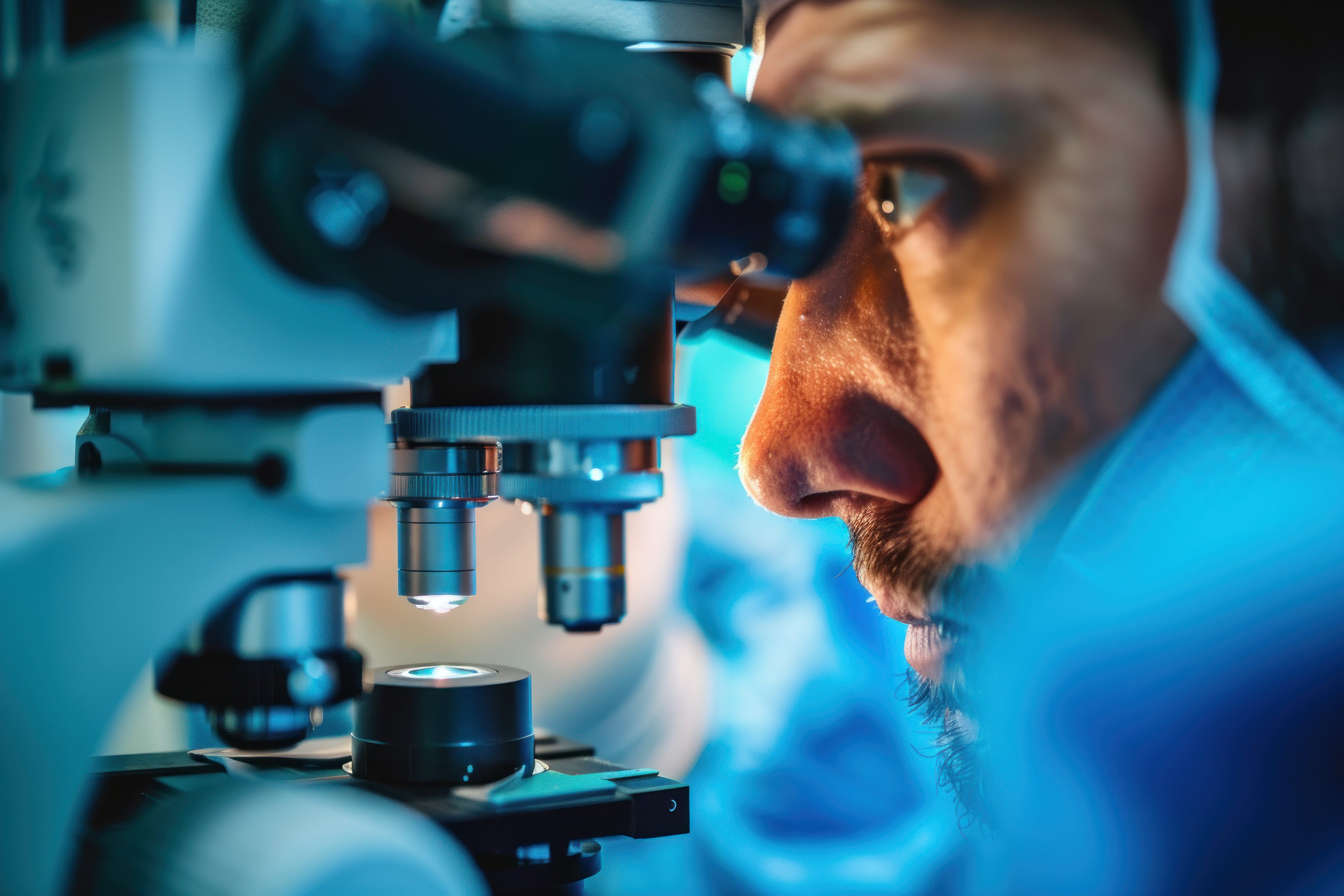
For decades, reversing human aging belonged mostly to science fiction. In June, researchers treated the first participant in a clinical trial of ER-100, an experimental gene therapy intended to rejuvenate damaged cells in the eye. The therapy activates three genes associated with cellular reprogramming, and its developers hope those genes can restore more youthful behavior in cells of the optic nerve without stripping the cells of their identities.
Some coverage presented the trial as the beginning of human age reversal. The study itself is far narrower. It is an early-stage trial involving adults with open-angle glaucoma or non-arteritic anterior ischemic optic neuropathy, two conditions that damage the optic nerve. Its main purpose is to evaluate the safety and tolerability of a single dose. It is not designed to make participants younger throughout their bodies, extend their lives or prove that human aging can be reversed.
Both descriptions contain part of the truth. The trial represents an important step for a field moving from experiments in cells and animals toward cautious testing in people. It also shows how easily a legitimate scientific milestone can be transformed into a much larger public claim. That gap, between altering some biology associated with aging and rejuvenating an entire person, is where much of the confusion begins.
What Does It Mean to Reverse Aging?
To most people, reversing aging suggests that an older person becomes physically younger. Muscles grow stronger, arteries become more flexible, memory sharpens, damaged organs repair themselves, and the risks of cancer, dementia, heart disease and frailty decline together.
In scientific reports, however, the phrase may mean something much more limited. A group of cells may begin producing proteins in a pattern more commonly seen in young cells. A mouse may recover more effectively from an injury. One human tissue may regain part of a function it had lost. A blood sample may receive a younger score from a computer model.
Each result could be scientifically important. None, on its own, shows that the aging of an entire person has been reversed.
Aging is not controlled by a single switch. It involves overlapping changes in DNA stability, gene regulation, energy production, immune function, inflammation, stem cells and communication among tissues. Scientists increasingly believe that some of these processes can be altered. Animal studies have shown that certain diets, drugs and genetic interventions can extend life or preserve function, helping establish geroscience, a field that asks whether targeting common mechanisms of aging could delay several diseases at once.
Human research is at a much earlier stage. Clinical trials have tested compounds and strategies aimed at particular pathways, diseases or biological measurements, but no intervention has been shown to reverse aging throughout the human body or extend the lifespan of healthy people.
Researchers have learned to manipulate parts of aging biology. They have not shown that they can rejuvenate an entire human being. Yet as findings move from laboratories into press releases, headlines and social media, that distinction often disappears.
How a Finding Becomes a Cure
Longevity hype does not require anyone to fabricate a result. Exaggeration can emerge gradually as information travels. A scientific paper may report that an intervention partially restored youthful gene activity in aged mouse tissue. A university news release may call the work a rejuvenation breakthrough. A company may say its technology could one day reverse diseases of aging. A headline may then declare that scientists are reversing aging.
By the time the finding reaches social media, the mouse, the tissue and the word “partially” may have disappeared.
The incentives are not difficult to understand. Researchers compete for funding, universities seek attention, biotechnology companies need investors, news organizations need readers, and clinics and supplement sellers need customers. Those pressures do not mean that the underlying science is wrong. They do mean that the boldest interpretation may travel farther than the most defensible one.
When a report says that scientists have “reversed aging,” several questions matter. Was the experiment conducted in isolated cells, animals or people? Did a laboratory measurement change, or did patients become healthier? Was there a control group? How many people participated? How long were they followed? Was the study testing safety or effectiveness? Has another research team reproduced the result?
The answers often transform an apparent medical revolution into something narrower, though still scientifically valuable. Few tools have contributed more to the confusion than biological-age tests, which can turn complex changes in the body into a deceptively simple number.
When a Biological Clock Runs Backward
Chronological age is simply the number of years since birth. Biological age is an estimate of how old the body appears according to selected measurements.
Some tests analyze blood chemistry, proteins, medical images or physical performance. Others examine DNA methylation, chemical tags that help regulate gene activity. Because methylation patterns change partly predictably over time, researchers can use algorithms known as epigenetic clocks to estimate age or the apparent pace of aging.
These clocks can be useful research tools, and some are associated with the later risk of disease or death across large populations. But they are not literal measurements of how many years a person has gained or lost. Different clocks examine different biological patterns and can give different answers for the same person. A treatment could change the variables used by one clock without improving strength, memory, organ function or survival.
For a biological-age measurement to replace a meaningful health outcome in a clinical trial, researchers would need to show that changing the measurement reliably predicts a change in outcomes patients care about. Current aging biomarkers have not yet met that standard.
The CALERIE study illustrates the problem. Researchers assigned 220 healthy adults without obesity either to reduce their calorie intake or to continue eating normally for two years. Calorie restriction improved several cardiovascular and metabolic risk factors.
When scientists later examined participants’ DNA methylation, one measure, called DunedinPACE, suggested a small slowing in the pace of aging. Other biological-age clocks did not change significantly. The researchers described the effect sizes as small.
It was reasonable to conclude that calorie restriction affected one measured feature of aging biology. It was not reasonable to conclude that the participants had become younger. The clocks disagreed, and the study was too short to determine whether anyone would live longer.
Yet a finding like that can readily become a headline declaring that a diet “reversed biological age.” The number sounds precise. What it proves is far less certain.
That measurement problem follows every experimental anti-aging treatment. Scientists must determine not only whether an intervention changes a molecular signal, but whether it leaves people healthier.
Three Ways Scientists Are Trying to Alter Aging
Several experimental approaches have attracted serious attention. Each is based on plausible biology. Each has produced encouraging findings in animals or early human studies. None has demonstrated whole-body human rejuvenation.
One of the most ambitious is partial epigenetic reprogramming, the approach behind ER-100. Nearly every cell in the body contains essentially the same DNA, but a liver cell and a nerve cell behave differently because they use different parts of that genetic instruction book. As cells age, some of the molecular controls governing gene activity change. Scientists discovered that a group of proteins known as Yamanaka factors can reset many of those patterns.
Applied fully, the process can turn a mature cell into something resembling an embryonic stem cell. That discovery transformed biology, but it also revealed the danger. A nerve cell that forgets it is a nerve cell has not been usefully rejuvenated. It has lost the identity it needs to function. Cells pushed too far may also grow abnormally or form tumors.
Partial reprogramming attempts to stop the process midway, far enough to restore more youthful activity but not far enough to erase the cell’s specialized role. Experiments in laboratory-grown cells and animals have produced younger molecular patterns and improvements in selected tissues. Researchers still face major questions about dosage, delivery, durability, loss of cell identity and safety. Reviews of the field describe partial reprogramming as promising while emphasizing that a younger reading on an epigenetic clock does not by itself establish organism-wide rejuvenation.
The eye is a logical place to begin because treatment can be delivered locally and the organ can be examined directly. If researchers eventually restore vision in people with optic-nerve damage, that would be a major medical advance. The immediate question, however, is whether targeted reprogramming can be delivered safely to one human tissue.
Other approaches are less radical. Rapamycin, for example, suppresses a cellular system called mTOR, which helps regulate growth, nutrient use and metabolism. The drug has repeatedly extended lifespan in mice, including in studies in which treatment began relatively late in life. That unusually strong animal evidence has led some people to take rapamycin off-label in hopes of slowing their own aging.
Human evidence remains much thinner. The PEARL trial followed healthy adults ages 50 to 85 who received intermittent low-dose rapamycin or a placebo for 48 weeks. Researchers reported that the regimens were relatively safe during the study period and found improvements in lean tissue mass and pain among some women.
The trial did not show that rapamycin slowed aging generally, prevented major age-related diseases or extended life.
A review of the clinical evidence similarly concluded that human studies have not established rapamycin or related drugs as proven treatments for delaying aging in healthy older adults. Existing studies tend to be small, use different doses and schedules, and focus on biomarkers or short-term physiological outcomes.
The evidence supplies a strong reason for larger trials. It does not give patients a reason to assume that lifespan gains in mice will transfer to people.
Senolytics take a different approach, targeting cells that may already be contributing to tissue damage. Some damaged cells enter a state called senescence. They stop dividing but remain alive and may release inflammatory substances that damage nearby tissue. Because they linger without functioning normally, they are sometimes described as “zombie cells.”
Removing certain senescent cells has improved several age-related conditions in mice. Small human studies have tested drugs intended to kill them selectively. An early pilot study tested the combination of dasatinib and quercetin in people with idiopathic pulmonary fibrosis, a serious lung disease. Researchers reported changes in some measures of physical function, but the trial was small, open-label and lacked a placebo group, making it impossible to determine whether the treatment caused the apparent improvements.
Another small study found evidence that the same drug combination reduced senescent-cell markers in people with diabetic kidney disease. That suggested biological activity, not general rejuvenation or longer life.
The zombie-cell metaphor also oversimplifies the biology. Senescent cells are not uniformly harmful. In some circumstances they can contribute to wound healing or restrain damaged cells that might otherwise divide uncontrollably. A successful treatment may need to remove harmful senescent cells while preserving useful ones.
Each of these approaches offers a plausible way to influence part of the aging process. The harder question is how far such advances could realistically extend, from repairing one tissue to rejuvenating an entire body.
How Far Could the Science Go?
Organ-specific repair is the most realistic near-term possibility. A treatment aimed at the eye, skin, muscle or immune system can be delivered to a relatively defined target. Researchers can measure whether that tissue improves and monitor it for harm.
Over the next several years, early clinical trials may show whether reprogramming, senolytics and other experimental treatments can safely restore some function in particular organs or diseases. Many trials will fail. Others may produce only modest improvements. But success in one tissue would still matter, even if the rest of the body continued to age normally.
The first useful rejuvenation therapies may look less like a universal fountain of youth and more like a new branch of regenerative medicine.
Expanding a local treatment into a whole-body therapy would be a very different problem. The boldest version of rejuvenation is easy to imagine: a treatment makes a 70-year-old function, across much of the body, like a healthy 50-year-old. No human intervention has shown that.
There is no single biological-age gauge inside the body. The heart, brain, muscles, kidneys and immune system can age at different rates. A person may have unusually healthy arteries but advanced arthritis, or strong muscles but early cognitive decline.
To demonstrate 10 or 20 years of whole-body rejuvenation, researchers would need more than a younger score on one test. They would have to show lasting improvements across several organ systems, such as stronger muscles, healthier blood vessels, more resilient immunity, better tissue repair and, eventually, lower rates of multiple major diseases.
Those effects would need to be reproduced by independent investigators and achieved without unacceptable increases in cancer, immune problems or other serious harms. Treating the entire body would also create an enormous delivery challenge. The appropriate dose for a liver cell might be dangerous for a neuron. A treatment that stimulates repair in one organ might promote abnormal growth in another.
A cautious forecast is possible, but it must be recognized as a forecast. During the next several years, the most informative results are likely to come from small studies testing safety, delivery and effects in individual tissues. Over the following 10 to 20 years, it is conceivable that medicine could develop treatments that restore lost function in selected organs or modestly slow deterioration across more than one body system, provided the early approaches prove safe and effective.
There is no comparable evidence-based timeline for making the entire body 10 or 20 years younger. That achievement would require breakthroughs in delivery, measurement, coordinated organ repair and long-term safety that have not yet been demonstrated.
Predictions that whole-body rejuvenation will arrive by a particular year are therefore expressions of judgment, optimism or commercial ambition. They are not conclusions that can be calculated from existing clinical evidence.
Even if researchers eventually learned to make several organ systems younger, that would not mean aging had been stopped. A one-time treatment might wear off, leaving the underlying processes to resume.
Stopping aging indefinitely is a much larger claim. It would require medicine to detect, prevent or repeatedly repair many forms of damage throughout the body for as long as treatment continued. It would also require balancing processes that can be both helpful and harmful. Cellular growth supports tissue repair but can promote cancer. Inflammation helps fight infection but can damage organs when it becomes chronic. Senescence may restrain dangerous cells but also contribute to age-related disease.
The brain presents an additional difficulty. Any repeated repair process would need to preserve memories, learned skills and personal identity.
No human experiment has shown that this can be done. No trial has established even a temporary, safe halt to overall biological aging. Stopping aging would also not mean immortality. A person who no longer experienced age-related deterioration would remain vulnerable to infection, injury and other causes of death.
Demographic evidence suggests that radical life extension is not already emerging from ordinary improvements in medicine. A 2024 analysis of the longest-lived populations found that increases in life expectancy had slowed and concluded that radical extension was unlikely this century unless the biological processes of aging could be markedly slowed.
Such population data cannot rule out a future breakthrough. They describe what has happened under existing conditions, not what an undiscovered technology might accomplish. But they illustrate the scale of the challenge. Preventing one age-related disease often allows another condition to become the limiting factor. Radical life extension would require reducing vulnerability across many diseases at once.
There is no credible scientific timeline for stopping aging indefinitely. That does not prove that it is impossible. It means the necessary steps have not been demonstrated, the technical path remains unclear and the available evidence does not support assigning a date.
The farther the forecast extends, from tissue repair to whole-body rejuvenation to indefinite control of aging, the thinner the evidence becomes.
Meanwhile, the interventions most clearly shown to preserve health in later life are far less futuristic.
What Already Extends Healthy Life
There is an irony at the center of the anti-aging debate. The approaches supported by the strongest human evidence are rarely marketed as age reversal.
Regular physical activity can help older adults maintain physical function, mobility and independence. Avoiding smoking, treating high blood pressure and cholesterol, receiving recommended vaccinations and managing metabolic disease can prevent or delay conditions that shorten healthy life.
These measures do not make anyone chronologically younger. They do something more concrete: reduce the likelihood of becoming sick, disabled or dependent earlier than necessary. That is the current foundation of extending healthspan, the portion of life spent in reasonably good health.
Experimental longevity medicine will eventually have to improve on that foundation, or add meaningfully to it.
The likely future may be less cinematic than the headlines suggest. Instead of one cure, medicine may develop a collection of treatments: one that repairs an injured optic nerve, another that preserves immune function, another that removes a harmful class of senescent cells, and perhaps combinations that delay several diseases at once.
Such advances could add healthy years to millions of lives without making anyone wholly young again. That distinction can sound disappointing only because the promise has become so enormous.
By ordinary medical standards, preserving sight, strength, memory and independence would be a revolution of its own.
Evidence & Source Transparency
Evidence First shows its work. The article ends above; this section is included so readers can inspect the main sources behind the factual claims.
The list below does not source every sentence. It focuses on the factual claims most important to the argument.
1. ER-100 and the first human trial
Claim or topic:
ER-100 has entered an early-stage human trial involving people with open-angle glaucoma or non-arteritic anterior ischemic optic neuropathy. The study is primarily designed to evaluate the safety and tolerability of a single dose, not to demonstrate whole-body age reversal or lifespan extension.
Source:
ClinicalTrials.gov: ER-100 clinical trial
Source type:
Primary document.
What it supports:
The trial registry supports the article’s description of the study population, intervention and early-stage safety focus. It also shows the much narrower scope of the trial compared with claims about reversing aging throughout the human body.
Important caveat:
An early-stage clinical trial establishes that a treatment is being tested in humans. It does not establish that the treatment is safe, effective, rejuvenating or capable of extending life.
2. Aging biology and the state of human anti-aging research
Claim or topic:
Scientists can alter biological processes associated with aging, particularly in laboratory animals, but human research is much less developed and has not established whole-body rejuvenation or lifespan extension in healthy people.
Source:
Academic review on geroscience
Academic review of human anti-aging interventions
Source type:
Academic research and analysis.
What it supports:
These sources provide background for the article’s description of geroscience and the effort to target biological processes associated with multiple age-related diseases. They also support the distinction between extensive experimental work on aging biology and the much more limited state of clinical evidence in humans.
Important caveat:
These are reviews of a developing research field. They provide context and synthesis, but they do not constitute evidence that any specific intervention has reversed whole-body human aging.
3. Biological-age tests and their limitations
Claim or topic:
Biological-age and epigenetic-clock measurements can be useful research tools, but a change in such a measurement does not by itself prove that a person has become biologically younger in a clinically meaningful sense.
Source:
Academic research on biomarkers of aging
Source type:
Academic research and analysis.
What it supports:
The source supports the article’s discussion of the challenges involved in validating biomarkers of aging and the distinction between a measurable biological signal and an outcome that reliably predicts improved health, function or survival.
Important caveat:
The article uses this evidence to explain a measurement problem. It does not imply that epigenetic clocks have no scientific value. Their usefulness depends on the particular clock, population and purpose for which they are being used.
4. Calorie restriction and the CALERIE biological-aging analysis
Claim or topic:
In the CALERIE trial, calorie restriction produced a small change in one measure of the pace of aging, DunedinPACE, while other biological-age measures did not show significant changes. The study did not establish that participants had become generally younger or would live longer.
Source:
CALERIE DNA-methylation analysis
Source type:
Academic research.
What it supports:
The study directly supports the article’s description of differing results across biological-aging measures and the characterization of the observed effect on DunedinPACE as small.
Important caveat:
The study examined biological-aging measurements over two years. It was not designed to determine whether calorie restriction extends human lifespan, and a change in one aging measure should not be interpreted as proof of whole-body rejuvenation.
5. Partial epigenetic reprogramming
Claim or topic:
Partial epigenetic reprogramming has produced promising results in cells and animals, but major questions remain about delivery, durability, preservation of cell identity, safety and the relationship between changes in epigenetic-age measurements and meaningful rejuvenation.
Source:
Nature Communications review of partial reprogramming
Source type:
Academic research and analysis.
What it supports:
The review supports the article’s description of partial reprogramming, its potential to restore more youthful cellular features, and the unresolved technical and safety challenges involved in translating the approach into human treatments.
Important caveat:
The source discusses a rapidly developing experimental field. Evidence from cells and animals cannot establish that partial reprogramming will safely rejuvenate entire human organs or the whole body.
6. Rapamycin as a possible longevity intervention
Claim or topic:
Rapamycin has unusually strong longevity evidence in mice, but human trials have not established that it slows aging generally, prevents major age-related diseases or extends human life.
Source:
Clinical review of rapamycin and related drugs
Source type:
Academic research and analysis.
What it supports:
The PEARL trial supports the article’s description of a 48-week study of intermittent low-dose rapamycin in adults ages 50 to 85 and its reported findings during that period. The review supports the broader conclusion that existing human studies are relatively small, heterogeneous and insufficient to establish rapamycin as a proven treatment for slowing human aging.
Important caveat:
Short-term safety and changes in selected physiological measures do not establish longer lifespan or broad rejuvenation. The article does not treat the human evidence as equivalent to the lifespan effects observed in mice.
7. Senolytic drugs and early human evidence
Claim or topic:
Senolytic treatments have shown biological and functional signals in small human studies, but those studies have not established general rejuvenation or longer life.
Source:
Dasatinib and quercetin pilot study in idiopathic pulmonary fibrosis
Study of senescent-cell markers in diabetic kidney disease
Source type:
Academic research.
What it supports:
The pulmonary-fibrosis study supports the article’s description of an early, small, open-label trial that reported changes in some physical-function measures. The diabetic-kidney-disease study supports the statement that dasatinib and quercetin showed biological activity associated with reductions in senescent-cell markers.
Important caveat:
The pulmonary-fibrosis study lacked a placebo group and was not designed to establish general anti-aging effects. Evidence that a treatment affects senescent-cell markers does not demonstrate whole-body rejuvenation, disease prevention or lifespan extension.
8. Forecasts of radical life extension
Claim or topic:
Recent demographic evidence suggests that gains in life expectancy have slowed in the world’s longest-lived populations and that radical life extension is unlikely under existing patterns of medical progress unless biological aging itself can be substantially altered.
Source:
Nature Aging analysis of life-expectancy trends
Source type:
Academic research and analysis.
What it supports:
The study supports the article’s discussion of slowing gains in life expectancy among long-lived populations and the scale of the change that would be required for radical life extension.
Important caveat:
Demographic trends cannot determine what an undiscovered future technology might accomplish. The source does not prove that whole-body rejuvenation or radical life extension is impossible, nor does it provide a timeline for such a breakthrough.
How to read this evidence
This article is the author’s analysis. The sources above are provided so readers can see where the factual claims come from and judge the evidence for themselves. Some sources support direct facts, while others provide context, estimates, or background evidence.
Production transparency
Evidence First uses artificial intelligence extensively for research, analysis, drafting, and editing. AI may generate substantial portions of the written article. Human editorial judgment determines the questions investigated, evaluates the evidence and competing explanations, reviews important factual claims and sources, determines what conclusions the evidence supports, and approves the article for publication. AI-generated statements are not treated as evidence; conclusions must be supported by the cited sources.
Corrections and updates
If a factual error is identified, this post will be corrected in the web version with a dated note explaining the change. Because email versions cannot be edited after sending, the web version should be treated as the current version.