


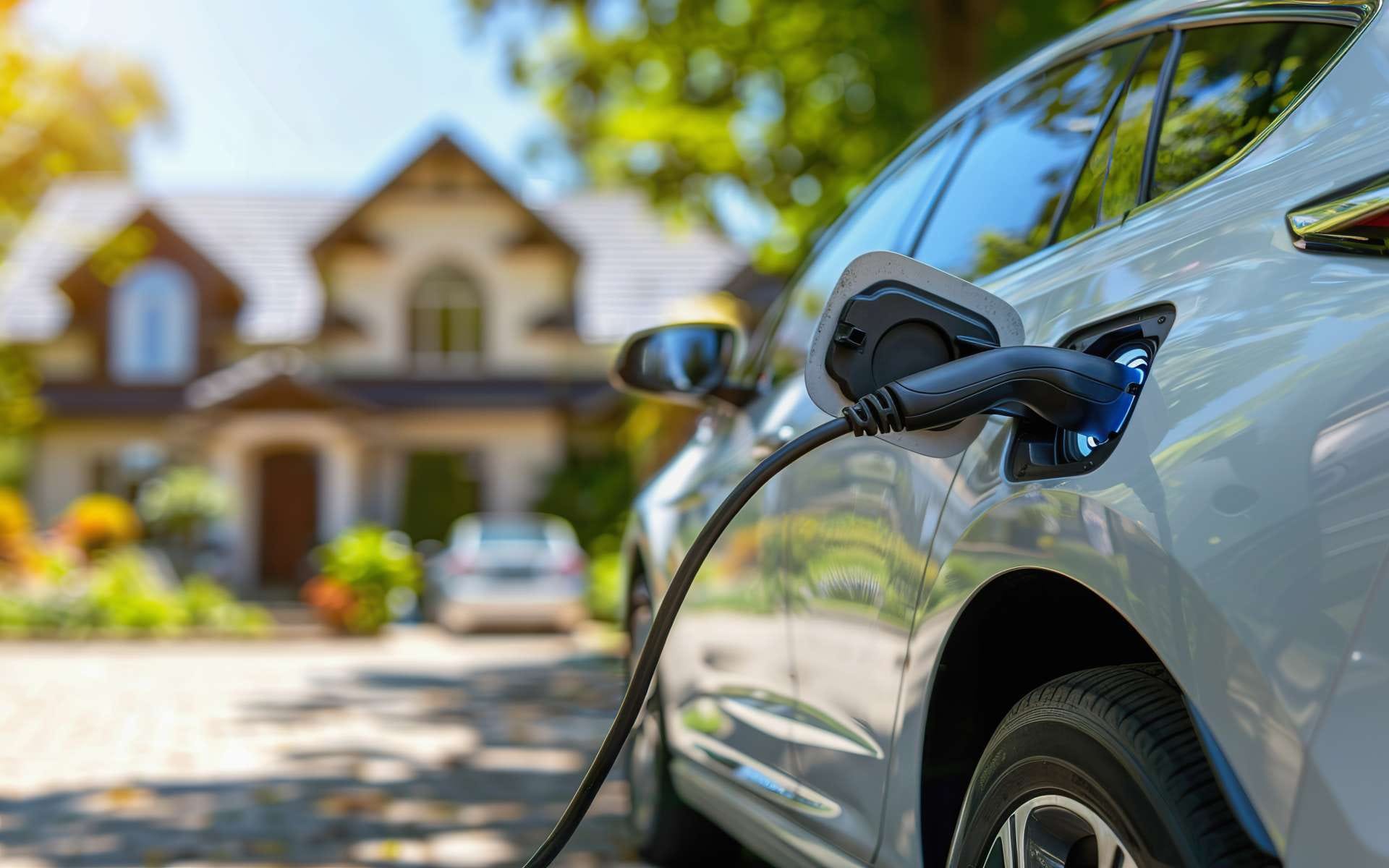
For many Americans, the electric vehicle has become more than a car. It is a symbol.
To supporters, it represents a cleaner future: no gas stations, no tailpipe smoke, no engine rumble, no carbon dioxide pouring out the back. To critics, it is a taxpayer-subsidized illusion, a car that merely hides its pollution somewhere else: in a coal plant, a lithium mine or a battery factory overseas.
Both stories contain a piece of the truth. Neither tells the whole story.
The best evidence points to a conclusion that is less satisfying for a political slogan but more useful for anyone trying to understand the issue. Electric vehicles are not zero-impact. They are not a cure-all for the environmental costs of driving. But compared with similar gasoline vehicles, they usually produce substantially less climate pollution over their full lives, even after accounting for battery manufacturing and the electricity used to charge them.
That does not make every electric vehicle equally clean. A small electric hatchback charged in a state with a relatively clean power grid is not the same as a 7,000-pound electric pickup charged in a region still heavily dependent on fossil fuels. Nor does it mean that replacing every gasoline car with an electric one would solve traffic, sprawl, road deaths, tire pollution or the environmental damage of mining.
But it does mean that one of the most common claims in the public debate, that electric cars are no cleaner than gas cars once you “count everything,” is not supported by mainstream evidence.
The important question is what, exactly, counts as “everything.”
For a gasoline car, the obvious pollution comes out of the tailpipe. Every gallon of gasoline burned releases carbon dioxide, the main heat-trapping gas driving climate change. But the full picture also includes drilling for oil, transporting it, refining it into gasoline and moving it to stations.
For an electric vehicle, the picture is different. There is no tailpipe. But there are emissions from building the car, manufacturing the battery, mining and processing minerals, generating electricity and eventually recycling or disposing of the battery. A fair comparison has to count all of that.
This is called a life-cycle analysis. In plain English, it means looking at a vehicle from production to retirement rather than judging it only by what happens while it is being driven.
When researchers do that, electric vehicles generally come out ahead.
The International Energy Agency, which tracks global energy systems, has found that a medium-size battery-electric car sold in 2023 produces roughly half the life-cycle greenhouse-gas emissions of a comparable gasoline car over about 15 years of driving. The exact number depends on where the car is used and how electricity is generated. But even if the power grid did not become cleaner over the vehicle’s lifetime, the agency found that battery-electric vehicles would still have a sizable emissions advantage.
The United States government’s own modeling points in the same direction. The Department of Energy and Argonne National Laboratory, using the widely cited GREET life-cycle model, have estimated that a representative 2025 electric vehicle produces about 46 percent fewer life-cycle greenhouse-gas emissions than a comparable gasoline vehicle using the average U.S. electricity mix. The Environmental Protection Agency similarly concludes that electric vehicles typically have a smaller carbon footprint than gasoline vehicles, even after accounting for battery production and charging.
Why does the electric car do so well, even when some of its electricity comes from fossil fuels?
The answer is efficiency.
A gasoline engine is an impressive technology, but it is also a wasteful one. Much of the energy in gasoline is lost as heat. Only a fraction becomes motion. The E.P.A. has estimated that conventional gasoline cars convert only about 16 to 25 percent of the energy in gasoline into movement at the wheels. Battery-electric vehicles, by contrast, convert a much larger share of stored energy into motion. The agency puts that figure around 87 to 91 percent from battery to wheels.
That efficiency advantage is enormous. It means that even when electricity generation produces emissions, the electric drivetrain often uses energy so much more efficiently that total emissions are lower.
This is the part of the story often missing from the claim that electric cars “just move pollution from the tailpipe to the power plant.” There is a grain of truth there. Some pollution does shift from the road to the electricity system. But it does not shift one-for-one. Power plants can be more efficient than millions of small engines, and electricity grids can be cleaned up over time by adding wind, solar, nuclear, hydro or other lower-carbon sources. A gasoline car bought today will keep burning gasoline for as long as it is driven.
Still, the critics are right about one important thing: Electric cars start with an environmental debt.
Manufacturing an electric vehicle, especially its battery, usually creates more emissions than manufacturing a comparable gasoline vehicle. Batteries require energy-intensive production and minerals such as lithium, nickel, cobalt, manganese and graphite. Mining and processing those materials can damage ecosystems, consume water and create toxic waste. In some places, mineral supply chains have also raised serious labor and human rights concerns.
That is not a footnote. It is central to the environmental accounting.
But a gasoline vehicle also has a supply chain. It depends on oil extraction, refining, shipping, pipelines, tanker trucks and combustion. The key difference is that battery-related emissions are mostly front-loaded, while gasoline emissions continue mile after mile. Over time, the gasoline car’s operating emissions usually overtake the electric car’s higher manufacturing emissions. The more the vehicle is driven, and the cleaner the electricity used to charge it, the clearer the electric vehicle’s climate advantage becomes.
A simple example helps. Imagine two similar cars leaving the factory, one gasoline and one electric. The electric car may begin with a larger carbon footprint because of its battery. But once both are on the road, the gasoline car emits carbon dioxide every time its engine runs. The electric car’s emissions depend on the electricity used to charge it. On a cleaner grid, the electric car pays back its manufacturing disadvantage relatively quickly. On a dirtier grid, the payback takes longer. But in most cases studied, the electric car eventually pulls ahead.
That does not mean the grid is irrelevant. Far from it.
An electric car in a region where electricity comes largely from coal will have a smaller climate advantage than one charged in a region with abundant renewables, nuclear power or hydropower. The same car can have different life-cycle emissions depending on where it is plugged in. This is why broad claims about electric vehicles can be misleading. “EVs are clean” and “EVs are dirty” are both too blunt. The better question is: compared with what, charged where, driven how far, and built how?
Vehicle size matters too. One of the uncomfortable truths of the electric-vehicle boom is that automakers have brought the same appetite for size and weight into the electric era. A huge electric SUV or pickup needs a bigger battery, more minerals and more energy than a smaller electric car. It may still emit less over its life than a comparable gasoline truck, but it will not be as clean as a smaller, lighter EV.
This is where political and media narratives tend to flatten the issue.
Pro-EV messaging often leans heavily on the phrase “zero-emission vehicle.” In regulatory language, that usually means zero tailpipe emissions. But to an ordinary person, it can sound like zero emissions, period. That is not accurate. Electric vehicles have no exhaust pipe, which is a major benefit, but they are not free of environmental costs.
Anti-EV messaging makes the opposite move. It points to real costs, including mining, battery production and fossil-fuel electricity, and then leaps to the much stronger claim that electric vehicles are no better than gasoline cars. That leap is where the argument usually breaks down. The caveats are real. The conclusion often is not.
Air pollution adds another layer.
Because electric vehicles have no tailpipe, they eliminate exhaust emissions where they are driven. That matters for people living near highways, ports, warehouses and busy roads, where vehicle pollution contributes to asthma, heart disease and other health risks. Replacing gasoline and diesel vehicles with electric ones can reduce local pollutants such as nitrogen oxides and tailpipe particles.
But no car is pollution-free. Vehicles also create non-exhaust particulate pollution from tires, brakes and road dust. Electric vehicles often use regenerative braking, which can reduce brake wear by using the motor to slow the car and recover energy. But they can also be heavier because of their batteries, and heavier vehicles can wear tires more quickly.
The Organization for Economic Cooperation and Development has estimated that electric vehicles generally emit somewhat less PM10, a category of larger inhalable particles, from non-exhaust sources than internal-combustion vehicles. But for the smaller PM2.5 particles, which can penetrate deep into the lungs, very heavy electric vehicles may emit more than comparable gasoline vehicles because of weight-related tire and road wear.
This is another reason the cleanest electric car is not simply the one with the largest battery or longest range. Smaller, lighter vehicles are better not only for climate emissions but also for road safety, tire pollution and material demand.
Battery recycling is often presented as a solution to the mineral problem. It can help, but it is not a magic wand.
In the long run, recycling could reduce the need for new mining by recovering valuable materials from old batteries. The International Energy Agency has projected that effective recycling could eventually cut demand for newly mined lithium, nickel and cobalt substantially, especially as the first large generations of EV batteries reach end of life. But the recycling system is still developing, and for now the rapid growth of electric vehicles means new mining remains necessary.
The strongest environmental case for electric vehicles, then, is not that they are harmless. It is that they are less harmful than the dominant alternative, particularly for climate change.
That distinction matters.
Climate change is driven by cumulative emissions. Carbon dioxide stays in the atmosphere for a long time. The transportation sector is one of the major sources of greenhouse gases. Passenger vehicles are a large part of that. If a technology can cut the lifetime emissions of cars by a large fraction, it matters, even if it does not eliminate emissions entirely.
But it also matters how the transition is carried out.
An electric future built around ever-larger vehicles, long commutes, sprawling development and disposable consumer habits will carry large environmental costs. An electric future built around smaller vehicles, cleaner grids, better transit, safer streets, battery recycling and fewer unnecessary car trips would deliver much larger benefits.
This is where the evidence diverges most sharply from the culture-war version of the debate. Electric vehicles are not an environmental hoax. Nor are they an environmental absolution. They are a cleaner drivetrain placed inside a transportation system that still has many problems.
For a household deciding whether to replace a gasoline car, the evidence-based answer is fairly clear. A reasonably sized electric vehicle, driven for many years and charged on the average U.S. grid, will usually be much better for the climate than a comparable gasoline car. The advantage grows if the local grid gets cleaner or if the driver can charge from low-carbon electricity. It shrinks if the EV is very large, rarely driven or charged in a fossil-heavy region, but it usually does not disappear.
For policymakers, the lesson is broader. Subsidizing electric cars may reduce emissions, but the biggest gains come when EV policy is paired with clean electricity, charging infrastructure, mineral standards, recycling systems, public transit and land-use policies that reduce the need to drive everywhere.
For the media, the lesson is simpler: stop treating the question as a binary.
The honest answer is not “EVs are clean” or “EVs are dirty.” It is this: Electric vehicles have real environmental costs, especially in manufacturing and mineral supply chains. But gasoline vehicles have larger lifetime climate costs because they burn fossil fuel continuously. When all major emissions are counted, the balance of evidence shows that EVs are usually substantially better for the climate and better for tailpipe air pollution, though not a complete solution to transportation’s environmental footprint.
That may not fit neatly on a bumper sticker. But it is what the evidence says.
Evidence & Source Transparency
Evidence First shows its work. The article ends above; this section is included so readers can inspect the main sources behind the factual claims.
The list below does not source every sentence. It focuses on the factual claims most important to the argument.
1. Life-cycle emissions from electric and gasoline vehicles
Claim or topic:
Electric vehicles usually produce substantially lower lifetime greenhouse-gas emissions than comparable gasoline vehicles, even after battery manufacturing and charging electricity are counted.
Source:
International Energy Agency, Global EV Outlook 2024
Source type:
Expert organization; analysis.
What it supports:
The IEA compares life-cycle emissions for battery-electric vehicles and internal-combustion vehicles, including vehicle production, battery production, fuel or electricity use, and driving over time. It supports the article’s central claim that EVs are usually much lower-emission over their full lives, not merely at the tailpipe.
Important caveat:
Life-cycle estimates depend on assumptions about vehicle size, battery size, electricity mix, driving distance, and future grid changes. The exact advantage varies by country and vehicle type.
2. U.S. life-cycle modeling for representative vehicles
Claim or topic:
A representative 2025 electric vehicle produces about 46 percent fewer life-cycle greenhouse-gas emissions than a comparable gasoline vehicle using the average U.S. electricity mix.
Source:
U.S. Department of Energy, GREET Life Cycle Assessment Model
Source type:
Government analysis; life-cycle model.
What it supports:
The DOE and Argonne National Laboratory’s GREET model is used to estimate emissions from vehicles and fuels across their life cycles. It supports the article’s U.S.-specific comparison between EVs and gasoline vehicles.
Important caveat:
This is a modeled estimate, not a direct measurement of every vehicle on the road. Results can differ by vehicle model, battery chemistry, region, and how the electricity is generated.
3. EPA summary of EV emissions and efficiency
Claim or topic:
EVs typically have a smaller carbon footprint than gasoline vehicles, and electric drivetrains are much more efficient than gasoline engines.
Source:
U.S. Environmental Protection Agency, Electric Vehicle Myths
Source type:
Government source; public-facing evidence summary.
What it supports:
The EPA supports two important points in the article: first, that EVs usually have lower lifetime climate emissions even when battery production and electricity are counted; second, that electric vehicles convert a much higher share of stored energy into movement than gasoline cars.
Important caveat:
The EPA page is a summary rather than a full technical paper. It is useful for explaining the evidence clearly, but the underlying numbers depend on assumptions about grid mix, vehicle class, and driving patterns.
4. Electricity mix and regional differences
Claim or topic:
The environmental advantage of an EV depends partly on where it is charged because electricity grids vary by region.
Source:
U.S. Department of Energy, Alternative Fuels Data Center
Source type:
Government data and analysis.
What it supports:
This source explains that EV emissions depend on the electricity used for charging. It supports the article’s point that an EV charged on a cleaner grid has a larger climate advantage than one charged on a more fossil-heavy grid.
Important caveat:
Regional grid emissions change over time. A vehicle’s lifetime emissions may improve if the grid becomes cleaner after the car is purchased.
5. Tailpipe emissions and local air pollution
Claim or topic:
EVs have no tailpipe emissions, which can reduce local exhaust pollution where vehicles are driven.
Source:
U.S. Department of Energy, Alternative Fuels Data Center
Source type:
Government data and analysis.
What it supports:
This supports the article’s distinction between tailpipe emissions and full life-cycle emissions. EVs do not emit exhaust from the vehicle itself, which matters for local air quality near roads, ports, warehouses, and urban traffic corridors.
Important caveat:
Zero tailpipe emissions does not mean zero total pollution. EVs can still be responsible for emissions from electricity generation, manufacturing, tire wear, road dust, and other sources.
6. Tire, brake, and road-dust pollution
Claim or topic:
EVs reduce tailpipe pollution but still produce non-exhaust particulate pollution from tires, brakes, and road dust. Heavier EVs may worsen some forms of particle pollution.
Source:
OECD, Non-exhaust Particulate Emissions from Road Transport
Source type:
Expert organization; analysis.
What it supports:
The OECD report supports the article’s point that EVs are not pollution-free. It addresses particulate emissions from non-exhaust sources and explains why vehicle weight matters, especially for tire and road wear.
Important caveat:
Non-exhaust emissions are harder to estimate than tailpipe emissions. Results depend on vehicle weight, tire type, driving behavior, road conditions, and assumptions about regenerative braking.
7. Battery recycling and mineral demand
Claim or topic:
Battery recycling could reduce future demand for newly mined minerals, but it is not enough yet to eliminate the need for new mining.
Source:
International Energy Agency, EV Battery Supply Chain Sustainability
Source type:
Expert organization; analysis.
What it supports:
This source supports the article’s claim that recycling can eventually reduce demand for newly mined lithium, nickel, and cobalt, especially as more EV batteries reach end of life.
Important caveat:
Recycling benefits depend on collection rates, recycling technology, economics, regulation, and how quickly the EV fleet grows. In the near term, new mining remains part of the battery supply chain.
8. Mining, water, toxicity, and labor concerns
Claim or topic:
Battery minerals can create environmental and social concerns, including mining impacts, water use, toxic waste, displacement, and labor or human-rights risks.
Source:
International Energy Agency, The Role of Critical Minerals in Clean Energy Transitions
Amnesty International, DRC: Cobalt and copper mining for batteries leading to human rights abuses
U.S. Department of Energy, 2023 Critical Materials Assessment
Source type:
Expert organization analysis; human-rights investigation; government assessment.
What it supports:
The IEA identifies lithium, nickel, cobalt, manganese, and graphite as important battery materials and discusses supply-chain, environmental, and social risks tied to critical-mineral production. Amnesty documents alleged forced evictions and other human-rights abuses linked to industrial cobalt and copper mining in the Democratic Republic of Congo. The DOE assessment provides U.S. government context on critical materials used in batteries and clean-energy technologies.
Important caveat:
These sources do not show that EVs are environmentally worse than gasoline vehicles overall. They support the narrower point that battery supply chains have real environmental and social risks that should be counted, managed, and reduced.
How to read this evidence
This article is the author’s analysis. The sources above are provided so readers can see where the factual claims come from and judge the evidence for themselves. Some sources support direct facts, while others provide context, estimates, or background evidence.
Corrections and updates
If a factual error is identified, this post will be corrected in the web version with a dated note explaining the change. Because email versions cannot be edited after sending, the web version should be treated as the current version.