


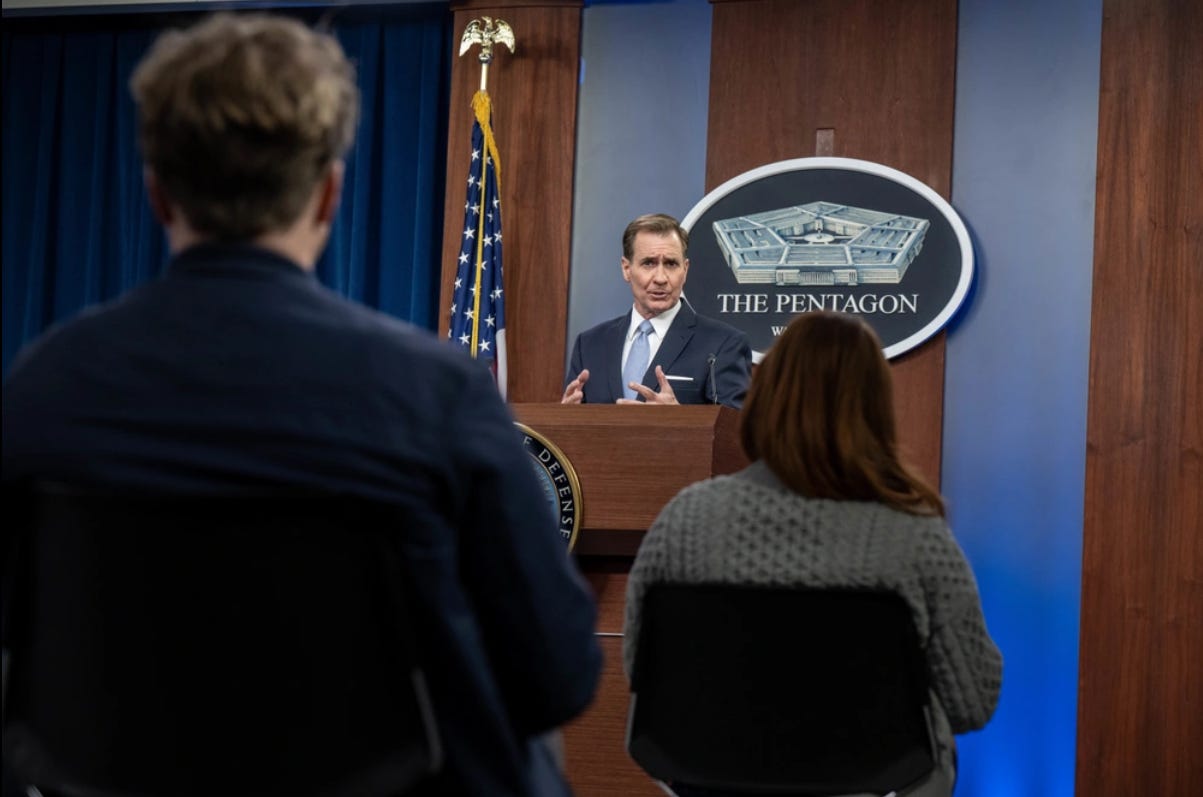
The question is no longer whether people are seeing things in the sky they cannot identify. They are. Military pilots have reported them. Sensors have recorded some of them. Congress has held hearings about them. The Pentagon has created offices to investigate them. NASA has studied how better data might be collected.
The more important question is what those sightings prove.
So far, the answer is narrower than either skeptics or believers often suggest. Unidentified anomalous phenomena, or UAPs, are real as reports and observations. Some cases remain unresolved. Some witnesses are credible. Some government officials appear to believe the public has not been told everything. But none of that, by itself, proves alien visitation.
That distinction matters.
A sighting can be sincere and still be mistaken. A video can be authentic and still be ambiguous. A sensor can record something unusual and still be affected by limits in angle, distance, calibration or interpretation. A former official can make a serious allegation and still not provide evidence that the public can independently test.
The public record has not produced the kind of proof that would settle the matter: a recovered craft with a clear chain of custody, biological material of nonhuman and non-terrestrial origin, raw multi-sensor data showing performance beyond known natural or human-made explanations, or independently verified physical evidence that scientists outside government control can examine.
That is why the official position remains cautious. NASA’s independent UAP study found no conclusive peer-reviewed evidence that UAP have an extraterrestrial origin, even as it recommended reducing stigma and improving data collection. The Pentagon’s All-domain Anomaly Resolution Office, or AARO, has likewise said it has found no verified evidence that the U.S. government possesses extraterrestrial technology or that investigated UAP cases represent alien activity.
Those statements do not prove that every UAP has been explained. They do not prove that the government has disclosed everything it knows. They do not prove that witnesses are lying. But they do mean that the alien-visitation claim has not met the burden of proof.
This is the evidentiary landscape into which The Age of Disclosure arrives.
The documentary, directed by Dan Farah, presents itself not as another fringe UFO film but as a serious intervention in a national security debate. Its force comes from its cast: former military, intelligence and government figures who say, in effect, that the public has been kept from the truth about nonhuman intelligence and recovered technology.
That makes the film compelling. It also makes the need for careful reasoning even greater.
The strongest version of the documentary’s case is not that viewers are shown proof of aliens. They are not. The strongest version is that a number of people with credentials, access or proximity to government programs are making claims that deserve investigation. That is significant. Testimony from serious people can justify hearings, subpoenas, record searches and declassification efforts.
But testimony is not the same as proof.
This is where much of the public debate becomes confused. Believers often treat official rank as a substitute for evidence. Skeptics often treat extraordinary claims as if they are automatically absurd. Neither approach is quite right. The proper question is not whether the witnesses are impressive, or whether the story sounds strange. The question is whether the evidence can survive outside the authority of the person presenting it.
Neil deGrasse Tyson has captured that point bluntly. His position has not been that the possibility of alien life is ridiculous. As an astrophysicist, he has often said life elsewhere in the universe is plausible. But plausibility is not proof of visitation. Tyson’s challenge to the government and UFO advocates is essentially: show the alien, show the craft, show the evidence.
Michael Shermer, the longtime skeptic, has been more dismissive of the documentary. His criticism is that The Age of Disclosure relies heavily on a familiar UFO pattern: dramatic testimony, claims of hidden knowledge, hints of imminent revelation and limited publicly testable evidence. To Shermer, the film may be polished and filled with notable people, but it does not solve the basic evidentiary problem.
That criticism is hard to avoid. The documentary raises the credibility of the disclosure issue more than it proves the extraterrestrial claim. It may show that some insiders believe extraordinary things. It may show that Congress should demand clearer answers. It may show that the public deserves more transparency about government UAP investigations. But it does not show the public independently verifiable alien technology.
The distinction is not a technicality. It is the heart of the matter.
There are many explanations that can fit at least part of the UAP record without invoking extraterrestrials: drones, balloons, aircraft, satellites, sensor artifacts, classified military systems, foreign surveillance technology, atmospheric effects, visual misperception or incomplete data. Some cases may remain unresolved not because they are alien, but because the evidence is too limited to identify them confidently.
At the same time, dismissing the entire subject as nonsense is no longer persuasive. The existence of unexplained reports, the seriousness of some witnesses and the national security implications of unknown objects in controlled airspace all justify investigation. Pilots should be able to report unusual encounters without stigma. Agencies should collect better data. Congress should be able to conduct oversight. The public should not have to rely on rumor, leaks or documentaries to understand what its government knows.
That may be the real value of The Age of Disclosure. It is not best understood as proof that aliens are here. It is better understood as pressure: pressure on institutions to disclose what they can, pressure on lawmakers to ask sharper questions and pressure on scientists to separate the study of unusual aerial phenomena from the mythology surrounding them.
The film asks viewers to believe that a hidden reality is being kept from them. The evidence asks for something more demanding: verification.
Until that verification appears, the most defensible conclusion remains unsatisfying but clear. UAPs are real as reported phenomena. Some cases remain unexplained. Some serious people believe the government knows more than it has admitted. The documentary adds weight to the case for transparency.
But it does not provide public proof of alien visitation.
The age of disclosure will not begin when prominent people say extraordinary things on camera. It will begin when the evidence no longer depends on who is speaking.
Evidence & Source Transparency
Evidence First shows its work. The article ends above; this section is included so readers can inspect the main sources behind the factual claims.
The list below does not source every sentence. It focuses on the factual claims most important to the argument.
1. NASA’s UAP evidence standard
Claim or topic:
NASA’s independent UAP study found no conclusive scientific evidence that UAPs are extraterrestrial in origin, while recommending better data collection and reduced stigma.
Source:
NASA UAP Independent Study Team Final Report
Source type:
Primary document
What it supports:
This supports the article’s claim that the official scientific posture is cautious: UAPs deserve better study, but the public evidence does not prove alien visitation.
Important caveat:
NASA did not claim all UAP cases are solved. Its report focused on the need for better data and scientific methods.
2. Pentagon and AARO findings
Claim or topic:
AARO has said it has not verified evidence that the U.S. government possesses extraterrestrial technology or that investigated UAP cases represent alien activity.
Source:
AARO Historical Record Report, Volume 1
Source type:
Primary document
What it supports:
This supports the article’s claim that the public government record does not establish recovered alien craft, alien bodies or extraterrestrial technology.
Important caveat:
AARO is itself a government office, so people skeptical of government disclosure may dispute whether it has access to everything. That concern does not, by itself, prove alien visitation.
3. Congressional UAP hearings
Claim or topic:
Congress has held public hearings on UAPs, including testimony from Ryan Graves, David Fravor and David Grusch.
Source:
House Oversight Committee UAP Hearing
Source type:
Primary document
What it supports:
This supports the article’s point that UAPs have moved from fringe discussion into mainstream congressional oversight and public policy debate.
Important caveat:
A congressional hearing can elevate and examine claims, but it does not automatically verify the claims made by witnesses.
4. Official Navy UAP videos
Claim or topic:
Some UAP videos are authentic government recordings, but authenticity does not establish extraterrestrial origin.
Source:
Department of Defense statement on historical Navy videos
Source type:
Primary document
What it supports:
This supports the article’s distinction between “real video” and “proof of aliens.” The Pentagon confirmed the videos were real, but did not say they showed extraterrestrial craft.
Important caveat:
“Unidentified” means not identified from available information. It does not mean alien.
5. The Age of Disclosure and its claims
Claim or topic:
The Age of Disclosure presents claims from former military, intelligence and government figures about nonhuman intelligence, recovered technology and alleged secrecy.
Source:
The Guardian
Source type:
Reputable journalism
What it supports:
This supports the article’s description of the film’s argument, including its claims about an alleged long-running cover-up and its use of interviews with people from government, military and intelligence backgrounds.
Important caveat:
This source summarizes the film and reactions to it. It does not independently prove that the film’s claims are true.
6. Neil deGrasse Tyson’s position
Claim or topic:
Neil deGrasse Tyson has argued that eyewitness testimony and unexplained sightings are not enough to prove alien visitation. He has emphasized the need for better evidence, physical evidence or testable data.
Source:
Big Think
Source type:
Reputable journalism
What it supports:
This supports the article’s summary of Tyson’s evidence-first position: alien life may be plausible in the universe, but alien visitation requires public, testable evidence.
Important caveat:
This source supports Tyson’s general evidence standard. It is not specifically a review of The Age of Disclosure.
7. Michael Shermer’s criticism
Claim or topic:
Michael Shermer criticized The Age of Disclosure for relying on testimony, dramatic claims and limited publicly testable evidence.
Source:
Michael Shermer, Skeptic
Source type:
Analysis
What it supports:
This supports the article’s description of Shermer’s skeptical reaction to the film and its evidentiary limits.
Important caveat:
Shermer is a skeptic and commentator, not a neutral adjudicating body. His review is useful for understanding the skeptical critique, not as a standalone disproof of every claim.
8. Ordinary explanations for some UAP reports
Claim or topic:
Some UAP reports can be explained by drones, balloons, birds, aircraft, sensor artifacts or incomplete data.
Source:
AARO Official UAP Imagery
Source type:
Primary document
What it supports:
This supports the article’s point that some cases become less mysterious when more information is available, and that unresolved does not automatically mean extraterrestrial.
Important caveat:
Explaining some cases does not explain every case. It supports caution about inference, not blanket dismissal.
How to read this evidence
This article is the author’s analysis. The sources above are provided so readers can see where the factual claims come from and judge the evidence for themselves. Some sources support direct facts, while others provide context, estimates, or background evidence.
Corrections and updates
If a factual error is identified, this post will be corrected in the web version with a dated note explaining the change. Because email versions cannot be edited after sending, the web version should be treated as the current version.